Super Premium Credit Cards in India 2026: The Real Guide for HNIs
Last updated on
If you are spending ₹2-3 lakh or more/month and want to know which card actually earns its fee, read on.
Too busy to read endless reviews & research?
Find the best cards that suit your lifestyle in 30 seconds
Try Monzy NowNo signup or email required
My colleague at a Bangalore startup hit ₹1 crore in annual salary last year. His bank's relationship manager called within 48 hours.
By the time I spoke to him, he had three super premium card applications sitting in his inbox, all from different banks, all promising 'unlimited lounge access' and 'exclusive concierge', and a host of other benefits. He had no idea which one to actually say yes to.
That confusion is the norm, not the exception in 2026 as the super premium credit card segment in India has never been more crowded (or more confusing).
Eight cards compete for the same wallet, with fees ranging from ₹10,000 to ₹66,000+, misleading ‘10X reward’ headlines, and buried conditions that quietly kill the ROI you thought you were getting.
This guide cuts through it. We analysed all eight cards against our database of 493 Indian credit cards with actual earn rates, real hidden conditions, spend math for a typical HNI profile, and the cases where each card genuinely wins.
TL;DR: Best Super Premium Credit Card by Priority
|
What Actually Makes a Card ‘Super Premium’?
India’s credit card tiers break down roughly like this:
- Entry-level: Free to ₹99–₹999 annual fee;
- Mid-tier cards: ₹1,000–₹4,999;
- Premium cards: ₹5,000–₹10,999;
- Super premium: ₹11,000 and above.
But fee alone does not define the category.
A genuine super premium card combines at least five of these:
- a credit limit of ₹5 lakh or higher (sometimes no pre-set limit);
- Unlimited airport lounge access (and other benefits) for both the primary and add-on cardholder;
- 24/7 concierge services that actually work;
- Elite hotel memberships (Club Marriott, Taj Epicure, ITC Culinaire), and;
- A reward structure that stays meaningful at ₹3 lakh+ monthly spends.
The cards in this guide span ₹10,000–₹66,000+ in annual fees (plus GST). Every one of them is aimed at HNIs spending ₹3 lakh or more per month. The question is which one earns that spend the most efficiently.
Quick Comparison: Top Super Premium Credit Cards (2026)
Card | Annual Fee | General Rate | Best-Case Rate | Unlimited Lounge? | Forex Markup | Invite Only? |
|---|---|---|---|---|---|---|
HDFC Infinia Metal | ₹12,500 + GST | ~3.33% | ~33.33% (Smartbuy) | ✅ Primary + Add-on | 2% | ✅ Yes |
HDFC Diners Club Black Metal | ₹10,000 + GST | ~3.33% | ~8.33% (Smartbuy hotels) | ✅ 1,300+ lounges | 2% | No |
Axis Bank Reserve | ₹50,000 + GST | ~1.5% | ~3% (international) | ✅ + 12 guest visits | 1.5% | No |
ICICI Emeralde Private Metal | ₹12,499 + GST | ~3% | ~3.3% | ✅ + guests | 2% | ✅ Yes |
IDFC FIRST Private | ₹50,000 + GST | ~0.25% | ~2.5% (above ₹30K/mo) | ✅ + Spa + Railway | 0% | ✅ Yes |
YES PRIVATE | ₹10,000 + GST* | ~2.5% | ~5% (international) | ✅ Domestic + Intl | 0.5% | ✅ Yes |
Times Black (ICICI) | ₹20,000 + GST | ~0.8% | ~1% | ✅ Primary + Add-on | 1.49% | No |
Amex Platinum | ₹66,000 + GST (~₹77,880) | ~0.5% | ~1.5% + vouchers (conditional) | ✅ Centurion + 1,550+ | 3.5% | No |
*YES PRIVATE annual fee is ₹10,000 + GST, but the joining fee is ₹50,000, making it a ₹60,000 first-year commitment.
Not sure which one fits your actual spend pattern? Answer a few questions and find the best card for your spend patterns, without any spam in the next 10 minutes. No forms. No spam.
Find Your Best Card in 30 Seconds with Monzy
1. HDFC Infinia Metal Edition: India’s Most Coveted Invite-Only Card
Annual Fee: ₹12,500 + GST | Joining Fee: ₹12,500 + GST | Fee Waiver: ₹10 lakh/year | Forex Markup: 2%
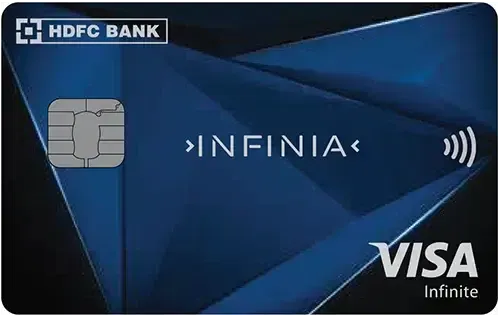
The HDFC Infinia Metal Credit Card is the card that the entire community obsesses over. Getting it requires a bank invitation, which typically follows years of being a premium HDFC customer with significant account balances and a strong spending track record. Once you have it, the reward structure is the best in the segment.
The Reward Structure
5 Reward Points per ₹150 on all retail spends (effective 3.33%) and 50 Reward Points per ₹150 on travel and hotel bookings via the SmartBuy portal (effective 33.33%). Points are worth ₹1 each when redeemed for flights or hotels on SmartBuy, capped at 70% of the booking value.
On ₹1,50,000 in hotel bookings via SmartBuy: 50 × (₹1,50,000 ÷ ₹150) × ₹1 = ₹50,000 in rewards — in a single month. For an HNI who concentrates hotel spend here, the Infinia pays for itself several times over.
Lounge Access
Unlimited complimentary domestic and international lounge access for both primary and add-on cardholders via Priority Pass. No quarterly spend condition, this is a meaningful differentiator from the Axis Magnus (which gates lounge access behind ₹50,000 quarterly spend).
Lifestyle Benefits
- Complimentary Club Marriott membership on spending ₹7.5 lakh in a calendar quarter
- Complimentary EazyDiner Prime membership
- Unlimited golf rounds and lessons at partnered courses
- Welcome benefit: 12,500 bonus points (worth ₹12,500) on payment of joining fee
Hidden Conditions on HDFC Infinia as of April 2026
|
2. HDFC Diners Club Black Metal: The Points Optimiser’s Card
Annual Fee: ₹10,000 + GST | Fee Waiver: ₹8 lakh/year | Forex Markup: 2%
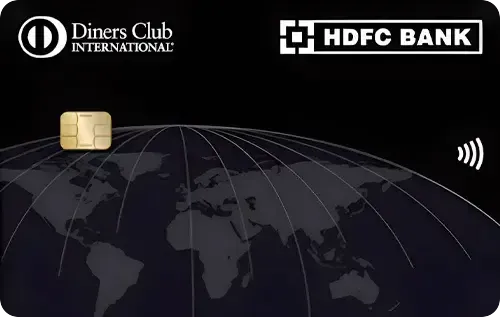
The Diners Club Black Metal is the lowest-fee card on this list and arguably punches well above that weight. The base earn rate of 3.33% is the same as Infinia’s general rate. The SmartBuy hotel acceleration (50X) matches Infinia. The difference is access: this card does not require an invitation.
Earn Rates
- 5 Reward Points per ₹150 on all spends (effective 3.33% at ₹1/point)
- 10X on Weekend Dining at standalone restaurants
- 25X on Flight bookings via SmartBuy
- 50X on Hotel bookings via SmartBuy
On ₹2 lakh in hotel stays per quarter via SmartBuy: 50 × (₹2,00,000 ÷ ₹150) × ₹1 = ₹66,667 in rewards per quarter. That’s ₹2,66,668/year on hotel spend alone.
Quarterly Milestone
Spend ₹4 lakh in a calendar quarter and earn 10,000 bonus Reward Points (worth ₹10,000). For any HNI spending ₹5 lakh+ monthly, that’s ₹40,000/year in automatic bonus rewards.
Welcome Benefits
Complimentary Club Marriott membership, Amazon Prime, and Swiggy One on spending ₹1.5 lakh within the first 90 days.
⚠ The Diners Club Acceptance Issues You Must KNow
|
Also Read: HDFC credit card lounge access guide 2026
3. Axis Bank Reserve: The All-Rounder for Frequent International Travellers
Annual Fee: ₹50,000 + GST | Fee Waiver: ₹35 lakh/year | Forex Markup: 1.5%
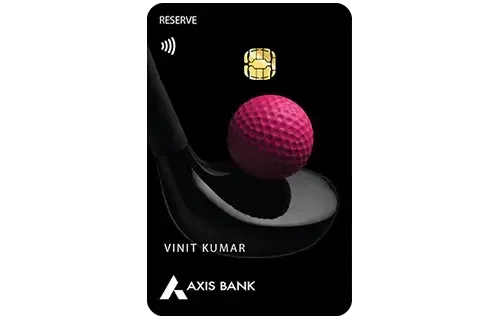
The Axis Reserve Credit Card is the most feature-complete super premium card for HNIs who travel internationally with family. Its lounge access for guests is the most generous on this list.
Earn Rates
- 30 EDGE Reward Points per ₹200 on international spends (effective 3%, at ₹0.20/point)
- 15 EDGE Reward Points per ₹200 on domestic spends (effective 1.5%)
- Welcome and renewal benefit: 50,000 EDGE points each time (worth ₹10,000)
On ₹5 lakh monthly international spend: 30 × (₹5,00,000 ÷ ₹200) × ₹0.20 = ₹15,000/month in rewards. Against the ₹50,000 annual fee, you are ahead within 4 months of full international spend.
Lounge Access: Best in Class
Unlimited domestic and international lounge access for both primary and add-on cardholders via Priority Pass, plus 12 complimentary guest visits per year for both domestic and international lounges. If you travel regularly with family, this benefit alone can be worth ₹15,000–₹25,000 annually at lounge entry rates.
Lifestyle Stack
- Complimentary Accor Plus membership, Club Marriott membership, ITC Culinaire membership
- 4 complimentary chauffeur-driven luxury airport transfers annually
- 8 complimentary VIP Assistance services at airports
- 50 complimentary golf rounds and lessons
⚠ Hidden Conditions on Axis Reserve
|
4. ICICI Emeralde Private Metal: Consistent 3% Rate with Clean Earn Structure
Annual Fee: ₹12,499 + GST | Fee Waiver: ₹10 lakh/year | Forex Markup: 2%
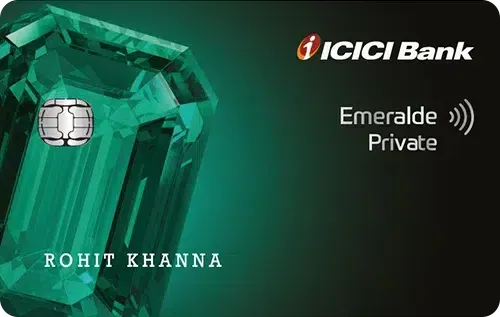
The Emeralde Private Metal is ICICI Bank’s invite-only flagship. Its real advantage over Infinia is structural simplicity — a flat 6 Reward Points per ₹100 across most categories (effective 3% at ₹0.50/point), with no complex portal or tiered rate you need to activate.
Earn Rates
- 6 Reward Points per ₹100 on all retail spends (effective ~3%)
- 6 RP on grocery, capped at 1,000 points per cycle
- 6 RP on utilities, capped at 1,000 points per cycle
- 6 RP on education, capped at 1,000 points per cycle
- 6 RP on insurance premiums, capped at 5,000 points per cycle
- Zero on rent, fuel, government, tax, wallets, property management
Lounge and Lifestyle
Unlimited domestic and international lounge access for primary and add-on cardholders, including guest access. Unlimited golf rounds and lessons, complimentary Club Marriott membership, and EazyDiner Prime. A quarterly milestone of one complimentary hotel night on spending ₹2 lakh in a quarter is a useful but underused benefit.
Unique Benefit Worth Knowing
Nil cash advance transaction fee on cash withdrawals, unusual in this segment. While you should never withdraw cash on a credit card as a habit, for genuine emergencies abroad, this eliminates a typical ₹500–₹1,000 transaction charge.
Also Read: ICICI Emeralde Community Review
5. IDFC FIRST Private: Zero Forex and Unlimited Spa Lounges
Annual Fee: ₹50,000 + GST | Fee Waiver: ₹10 lakh/year | Forex Markup: 0%

The IDFC FIRST Private takes a position no other card on this list matches: zero foreign currency markup on all international transactions. For an HNI spending ₹10 lakh/month internationally, this alone saves ₹3.5 lakh/year versus a card with a 3.5% markup, more than covering the ₹50,000 annual fee.
Earn Rates
- 6 points per ₹100 on online spends up to ₹30,000/month
- 3 points per ₹100 on in-store spends up to ₹30,000/month
- 10 points per ₹100 on all incremental spends above ₹30,000/month
- 1 point per ₹100 on insurance premium payments
- Zero on fuel, EMI transactions, and cash withdrawals
At ₹0.25/point, the effective rates are 0.75%–1.5% below ₹30,000/month, and 2.5% above it. On a ₹5 lakh/month spend: ₹30,000 at 6X + ₹4,70,000 at 10X = 1,800 + 47,000 = 48,800 points × ₹0.25 = ₹12,200/month in reward value.
Lounge Access on IDFC First Private
Unlimited domestic airport lounges, unlimited international lounges, unlimited spa access at Indian airports, 4 complimentary guest visits at domestic lounges annually, and unlimited railway lounge access. The spa access is genuinely exclusive, no other card on this list includes it unconditionally.
⚠ Important Corrections vs. Common Claims
|
6. YES PRIVATE: The Highest International Earn Rate on This List
Annual Fee: ₹10,000 + GST | Joining Fee: ₹50,000 (first year total: ₹60,000) | Fee Waiver: ₹25 lakh/year | Forex Markup: 0.5%
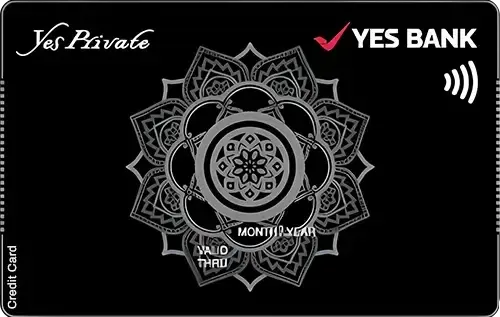
YES PRIVATE is the most misread card on this list. The ₹10,000 annual fee looks modest until you see the ₹50,000 joining fee, this is a ₹60,000 first-year commitment. Access is invite-only, exclusively for YES Bank Private Banking clients. But for those who qualify, the international earn rate of 5% is the highest on this comparison.
Earn Rates
- 20 Reward Points per ₹100 on domestic spends (effective 2.5% at ₹0.25/point minimum, higher on smart redemption)
- 40 Reward Points per ₹100 on international spends (effective 5%)
On ₹5 lakh international spend in a month: 40 × (₹5,00,000 ÷ ₹100) = 2,00,000 points. At ₹0.25/point minimum value = ₹50,000. With better redemptions, the value is higher.
Combined Forex + Earn Rate Advantage
Forex markup of 0.5% combined with 5% international earn rate gives a net return of 4.5% on international spends, the best combination on this list. For context, the Amex Platinum earns 0.5% on most spends and charges 3.5% in forex markup, meaning you are effectively losing 3% on every international transaction.
Insurance Coverage
₹5 crore Air Accident cover and ₹1 crore emergency medical cover while travelling abroad. For HNIs with significant international travel exposure, this cover is meaningful and is often not available on cards at this fee level.
⚠ Hidden Conditions on YES PRIVATE
|
7. Times Black (ICICI Bank): Premium Lifestyle, Low Reward Rate
Annual Fee: ₹20,000 + GST | Fee Waiver: ₹25 lakh/year | Forex Markup: 1.49%

The Times Black targets India’s urban luxury lifestyle crowd, the executive who wants premium airport transfers, curated restaurant access, and exclusive event invitations. The reward rate is modest for the fee tier, but the lifestyle stack is genuine.
Earn Rates
- 2.5 Reward Points per ₹100 on international spends
- 2 Reward Points per ₹100 on domestic spends
- 2 RP on utility, insurance, education, and government payments (capped)
- Zero on fuel, rent, and EMI
At ₹0.40/point (statement credit value), that’s 0.8%–1% effective return. For a ₹20,000 fee card, this is the weakest reward rate on the list. The card earns its place through lifestyle benefits, not points accumulation.
Milestone Benefits
- Klook gift voucher worth ₹10,000 on ₹2 lakh spend
- Luxury airport transfer via Sedan (Avis) or BLADE Air on ₹5 lakh spend, via a points wallet, not automatic
- Tata CLiQ Luxury voucher worth ₹10,000 on ₹10 lakh spend
⚠ What the Marketing Doesn't Mention?
|
Also Read: What Real users say about Times Black Card
8. American Express® Platinum Card: Global Hotel Status, Not a Rewards Machine
Annual Fee: ₹66,000 + GST (~₹77,880 all-in) | Joining Fee: ₹66,000 + GST (~₹77,880 all-in) | Forex Markup: 3.5%
The Amex Platinum is not a reward points card. It is a lifestyle infrastructure play, automatic elite hotel status, global Centurion Lounge access, and a concierge that genuinely solves problems. If you are optimising for reward rates, this is the wrong card. If you are optimising for seamless luxury travel globally, it may be the only card.
What the ~₹77,880 Annual Fee Actually Buys
- 1,550+ lounges worldwide including Centurion Lounges, Priority Pass, and Plaza Premium
- Automatic Marriott Bonvoy Gold Elite status
- Automatic Hilton Honors Gold status
- Automatic Taj InnerCircle Epicure membership
- Automatic Accor Live Limitless Silver status
Statement Credits That Offset the Fee
Unlike the US Amex Platinum, the Indian version does not credit your statement automatically with flat travel or dining credits. What Amex India offers instead are conditional Amex Offers, for example, “Spend ₹1 lakh on Amex Travel Online, get ₹20,000 back.” These require high incremental spending to trigger, and whether you can realise the full value depends on your existing booking habits. The genuine offset comes from the welcome and renewal benefit: typically 1,00,000 Membership Rewards points or Taj/Luxe vouchers worth ₹45,000–₹60,000 on payment of the fee. If you redeem these vouchers at Taj properties, you can recover 60–80% of the annual fee on day one.
The Honest Catch
The 3.5% forex markup is the worst on this list. On ₹2 lakh in monthly international spends, that is ₹7,000/month leaking directly to the bank before rewards. The base earn rate of 1 point per ₹50 (effective 0.5%) does not compensate. At a total first-year outlay of ~₹77,880, the Amex Platinum is worth it only if you actually stay at Taj/Marriott/Hilton properties and extract the welcome vouchers plus hotel status benefits. For domestic-heavy spenders, you will struggle to break even.
Also Read: Recent Devaluation of Amex Platinum Credit Card
Also Read: Amex Reward Multiplier Discontinued: What Happens to Your Membership Rewards Points Now?
Real Spend Scenario: ₹5 Lakh/Month HNI Profile
How do these cards actually stack up against a realistic HNI spend? Here is a simulation at ₹5 lakh/month. Note: Infinia’s international component is modelled at SmartBuy hotel rate. Actual results depend heavily on redemption behaviour and whether your spending aligns with SmartBuy.
Category | Monthly Spend | Infinia | Axis Reserve | YES PRIVATE | Diners Black Metal |
|---|---|---|---|---|---|
International travel & hotels | ₹1,50,000 | ₹15,000 (Smartbuy) | ₹4,500 (3%) | ₹7,500 (5%) | ₹5,000 (3.33%) |
Domestic flights & hotels | ₹80,000 | ₹2,667 (3.33%) | ₹1,200 (1.5%) | ₹2,000 (2.5%) | ₹2,667 (3.33%) |
Dining & entertainment | ₹60,000 | ₹2,000 (3.33%) | ₹900 (1.5%) | ₹1,500 (2.5%) | ₹2,000 (3.33%) |
Shopping & lifestyle | ₹80,000 | ₹2,667 (3.33%) | ₹1,200 (1.5%) | ₹2,000 (2.5%) | ₹2,667 (3.33%) |
Utilities & bills | ₹30,000 | ₹1,000 (3.33%) | ₹0 (excluded) | ₹750 (2.5%) | ₹0 (excluded) |
GROSS MONTHLY REWARDS | ₹23,334 | ₹7,800 | ₹13,750 | ₹12,334 | |
Annual rewards | ₹2,80,008 | ₹93,600 | ₹1,65,000 | ₹1,48,008 | |
Less: Annual fee | ₹12,500 | ₹50,000 | ₹10,000 (yr 2+) | ₹10,000 | |
NET ANNUAL VALUE | ₹2,67,508 | ₹43,600 | ₹1,55,000 | ₹1,38,008 |
*All calculations assume optimal redemption. Infinia modelled at SmartBuy hotel rate for international component. Diners Black Metal modelled at 3.33% base rate for this simulation. YES PRIVATE at ₹0.25/point. Excluded categories assumed ₹0 across all cards.
The numbers above assume your spend is distributed like the table. Yours probably isn't, and that changes the winner entirely. Run your actual spend preferences with Monzy and find your best card in 10 minutes.
Try Monzy Now
International Spend: Who Actually Wins After Forex Markup?
Most blogs compare earn rates without accounting for forex markup eating into returns. This table shows the real net return on international spend:
Card | Forex Markup | Intl Earn Rate | Net Return on Intl Spend |
|---|---|---|---|
IDFC FIRST Private | 0% | 2.5% (above ₹30K/mo) | 2.5% |
YES PRIVATE | 0.5% | 5% | 4.5% |
Axis Bank Reserve | 1.5% | 3% | 1.5% |
Times Black (ICICI) | 1.49% | 1% | -0.49% |
HDFC Infinia / Diners Black Metal | 2% | 3.33% | 1.33% |
ICICI Emeralde Private Metal | 2% | 3% | 1% |
Amex Platinum | 3.5% | 0.5% | -3% |
The takeaway: Amex Platinum with its 3.5% forex markup effectively charges you to spend internationally. Times Black is barely break-even. IDFC FIRST Private and YES PRIVATE are the clear winners for pure international spend optimisation.
Which Card Should You Actually Get?
Get HDFC Infinia Metal if:
You receive an invite, book a significant volume of hotel stays via SmartBuy, and are willing to concentrate spend on HDFC’s ecosystem. The 33.33% SmartBuy hotel rate is unmatched in India. The fee waiver at ₹10 lakh is achievable for any genuine HNI. The invite-only nature is the only real barrier.
Get HDFC Diners Club Black Metal if:
You want the same SmartBuy reward rates as Infinia at half the annual fee, without needing a bank invitation. The Diners Club acceptance limitation is real but manageable if your primary spends are at hotels, airlines, and premium restaurants. Best entry point into the HDFC premium ecosystem.
Get Axis Bank Reserve if:
You travel internationally with family regularly. The 12 complimentary guest lounge visits annually is a benefit you will use. The 1.5% forex markup is reasonable. The high ₹35 lakh fee waiver threshold means most users will pay the full ₹50,000 annually, make sure the lifestyle and reward value justifies it.
Get ICICI Emeralde Private Metal if:
You prefer a clean, consistent reward structure over portal optimisation. The flat 3% effective rate across all categories (before caps) is predictable and accumulates well for steady high spenders. The invite-only access means you need an existing ICICI premium relationship.
Get IDFC FIRST Private if:
You spend heavily on international transactions and want the maximum forex saving. Zero markup saves real money at scale. The unlimited spa lounge access is a genuine differentiator. Just go in knowing the reward rate (₹0.25/point) is modest, and the birthday 10X is a charity contribution, not a reward.
Get YES PRIVATE if:
You are already a YES Private Banking client and travel internationally frequently. The 5% international earn rate combined with 0.5% forex markup gives you the best net return on international spend on this list. The insurance cover (₹5 crore air accident, ₹1 crore medical) is a meaningful bonus.
Get Amex Platinum if:
Hotel status is your priority, you stay regularly at Taj, Marriott, or Hilton properties, and you will extract the welcome/renewal vouchers (₹45,000–₹60,000 face value). Account for the ~₹77,880 total annual cost rather than the widely quoted ₹60,000 base figure. Do not get this card if you are optimising for reward points ROI, the 3.5% forex markup will consistently disappoint, and the Indian version lacks the automatic flat statement credits that make the US Amex Platinum a cleaner numbers story.
Skip Times Black (ICICI) unless:
You specifically value the lifestyle and airport transfer benefits and are a heavy Zomato user (Zomato Gold inclusion is a real benefit for metro HNIs). The 0.8%–1% reward rate is genuinely low for a ₹20,000 fee card. The hidden conditions around airport transfers and cancellation charges make the ‘complimentary’ benefits less straightforward than advertised.
Every Card’s Biggest Hidden Condition
Beyond the individual card sections above, here is a quick summary of the most consequential conditions marketing does not lead with:
- Infinia: Points only earn on transactions in multiples of ₹150. Below that, zero.
- Diners Black Metal: Points capped at 75,000 per statement cycle, ultra-high spenders hit this ceiling.
- Axis Reserve: Fuel, insurance, rent, utilities, and wallet loads are excluded. The advertised ‘earn on all domestic spends’ is misleading.
- Emeralde Private Metal: Grocery, utilities, education, and insurance points are each capped per cycle.
- IDFC FIRST Private: The birthday 10X is a bank-directed charitable donation, not reward points. The ‘interest-free cash withdrawal’ claim is contradicted by actual MITC terms.
- YES PRIVATE: Points expire in 36 months. No points on fuel, wallets, rent, or EMIs.
- Times Black: Airport transfers require hitting a spend milestone first. Zero cancellation cover is capped at ₹12,000 across 2 incidents.
- Amex Platinum: ‘No pre-set spending limit’ is not a blanket approval, Amex can decline any charge. The 3.5% forex markup is punitive for international spenders.
How to Qualify for Super Premium Cards
Most of these cards have access conditions well beyond a credit score:
- Income requirements: Salaried applicants generally need ₹15L–₹40L+ annual income depending on the card; self-employed ₹25L–₹60L+.
- Bank relationship: HDFC Infinia, IDFC FIRST Private, YES PRIVATE, and ICICI Emeralde Private Metal are available only to existing premium banking clients with significant relationship value.
- CIBIL score: 750+ is the baseline; 800+ is strongly preferred for invite-only cards. Any missed EMI in the past 24 months significantly reduces invite probability.
- Spending track record: Banks monitor existing card behaviour before extending invites. Consistent high spend across categories over 12–24 months is the usual trigger.
- For open-application cards (Axis Reserve, Diners Black Metal): approach through your bank’s relationship manager or premium banking channel rather than online, it improves both processing speed and approval odds.
What the Community Actually Says about these cards?
The HDFC Infinia is the most discussed super premium card on r/creditcardsindia: consistently described as the segment’s ‘holy grail’. The SmartBuy hotel rate dominates the conversation. Invite stories are common: most recipients report getting the call after 2–3 years of being a high-value HDFC salary account holder with consistent credit card spend.
The Axis Magnus (the Reserve’s more accessible sibling) has drawn significant criticism on TechnoFino forums after its lounge access was gated behind a ₹50,000 quarterly spend condition. The devaluation went deeper than lounge access: the famous milestone of 25,000 bonus points per ₹1 lakh spend is gone, and the airline transfer ratio was cut from 5:4 to 5:2 for standard users, effectively halving the travel miles value. On ₹18 lakh annual spend, users who once projected ₹90,000+ in value now realistically earn closer to ₹43,000. The Reserve has avoided these cuts so far, which is a key reason to prefer it over the Magnus despite the higher fee, but it is worth monitoring, because no super premium card is immune to devaluation.
Now that we're discussing devaluations, you should also read more about recent devaluations to all Indian credit cards, too
The Times Black generates split views, consistent lounge access is praised, but critics point to the low per-point value and the ‘wallet-based’ airport transfer structure that confuses users expecting a simple complimentary service.
YES PRIVATE is rarely discussed publicly because its users operate in a different social layer. The 0.5% forex markup and 5% international earn rate are consistently cited among users who have it as primary reasons they retain it despite the ₹50,000 joining fee.
━━━━━━━━━━━━━━━━━━━━━━━━━━━━━━━━━━━━━━━━━━━━━
Still deciding?
Most people reading this guide are choosing between 2–3 cards. The Monzy recommendation engine compares 400+ Indian credit cards against your spend pattern, and gives you the best card in 10 minutes.
Free. No sign-up required.
→ Find your best card in 10 minutes at monzy.co
━━━━━━━━━━━━━━━━━━━━━━━━━━━━━━━━━━━━━━━━━━━━━
Frequently Asked Questions
What is the most premium credit card in India in 2026?
By annual fee: Amex Platinum at ₹66,000 base (approximately ₹77,880 with GST). By invite-only exclusivity: HDFC Infinia Metal, IDFC FIRST Private, and YES PRIVATE. By net reward value for HNI spenders: HDFC Infinia wins on SmartBuy-concentrated spend, YES PRIVATE wins on pure international spend.
Is the annual fee worth it on super premium credit cards?
It depends entirely on benefit activation. HDFC Infinia at ₹12,500 can generate ₹2–3 lakh in annual rewards for HNIs spending ₹5L+/month via SmartBuy. Amex Platinum’s ~₹77,880 all-in cost can be partially offset by the welcome/renewal vouchers (₹45,000–₹60,000 face value on Taj/Luxe) plus hotel status benefits, but the Indian version’s “credits” are conditional Amex Offers, not automatic statement credits. The question to ask: what is the card’s annual value if I use only the benefits I will actually use?
Can I get a super premium card without a banking relationship?
For invite-only cards (Infinia, IDFC FIRST Private, YES PRIVATE, Emeralde Private Metal), an existing premium banking relationship is typically required. Axis Reserve and Diners Club Black Metal accept applications without a pre-existing relationship, though approaching via a relationship manager improves outcomes.
Which super premium card is best for international transactions?
IDFC FIRST Private (0% forex, 2.5% earn on high monthly spend) and YES PRIVATE (0.5% forex, 5% earn rate) are the clear winners. Amex Platinum is the worst option for pure international spend, its 3.5% forex markup produces a net negative return on most transactions.
Do super premium cards offer better lounge access than premium cards?
Significantly better. Premium cards typically offer 4–8 domestic lounge visits per year with spend conditions. Super premium cards offer unlimited domestic and international access for both cardholder and add-on, often including guest access and spa facilities. Axis Reserve adds 12 complimentary guest visits, unusual even in this tier.
What happens if a super premium card gets devalued?
It happens. The Axis Magnus is a recent example where unlimited lounge access was moved behind a quarterly spend condition. Cards like Infinia and Reserve have remained more stable because their fee tiers and invitation structures limit the customer base. Still, no card is immune. Monitor TechnoFino and r/creditcardsindia regularly if you hold these cards.
At the end, I'd say that the super premium card segment in India offers genuine value for HNIs who spend ₹3 lakh+ monthly, but only for those who match their card to their actual spending pattern rather than marketing headlines.
If you concentrate hotel and travel bookings via HDFC’s SmartBuy, Infinia is unbeatable. If you travel internationally with family, Axis Reserve’s guest lounge access and reasonable forex markup make the ₹50,000 fee justifiable. If you spend heavily abroad and want maximum net return, YES PRIVATE wins. If zero forex and spa lounge access matter most, IDFC FIRST Private. If hotel status is the goal, Amex Platinum.
Start with your actual spend breakdown. The right card is the one that earns the most against what you already spend — not the one with the most impressive welcome letter.
Internal links: HDFC Infinia deep-dive review | ICICI Emeralde community review | Times Black user reviews | All Axis Bank credit cards
Disclaimer: Credit card terms, fees, and benefits are subject to change by issuing banks. All figures mentioned are based on publicly available information and database analysis current as of early 2026. This is not financial advice: please verify all benefits directly with your issuing bank before applying.
About the Author

Anmol Ratan Sachdeva
Anmol has been tracking the Indian credit card market since 2019, reviewing benefits, changes across 40+ cards and documenting issuer devaluations in real time. He personally has a card portfolio across HDFC, Axis, SBI Card, ICICI, and writes from direct usage experience. His analysis focuses on real-world return calculations rather than headline reward rates. He writes content for educational purposes.