Flex by Google Pay Axis Bank Card: Lifetime Free, Stars Rewards, 1.6% Max (2026)
Last updated on
Flex by Google Pay is Axis Bank's lifetime free RuPay UPI credit card, earning 1 Star point per ₹500 and up to 1.6% at higher spends. Fees, reward tiers and how it compares to the SBI version.
Too busy to read endless reviews & research?
Find the best cards that suit your lifestyle in 30 seconds
Try Monzy NowNo signup or email required
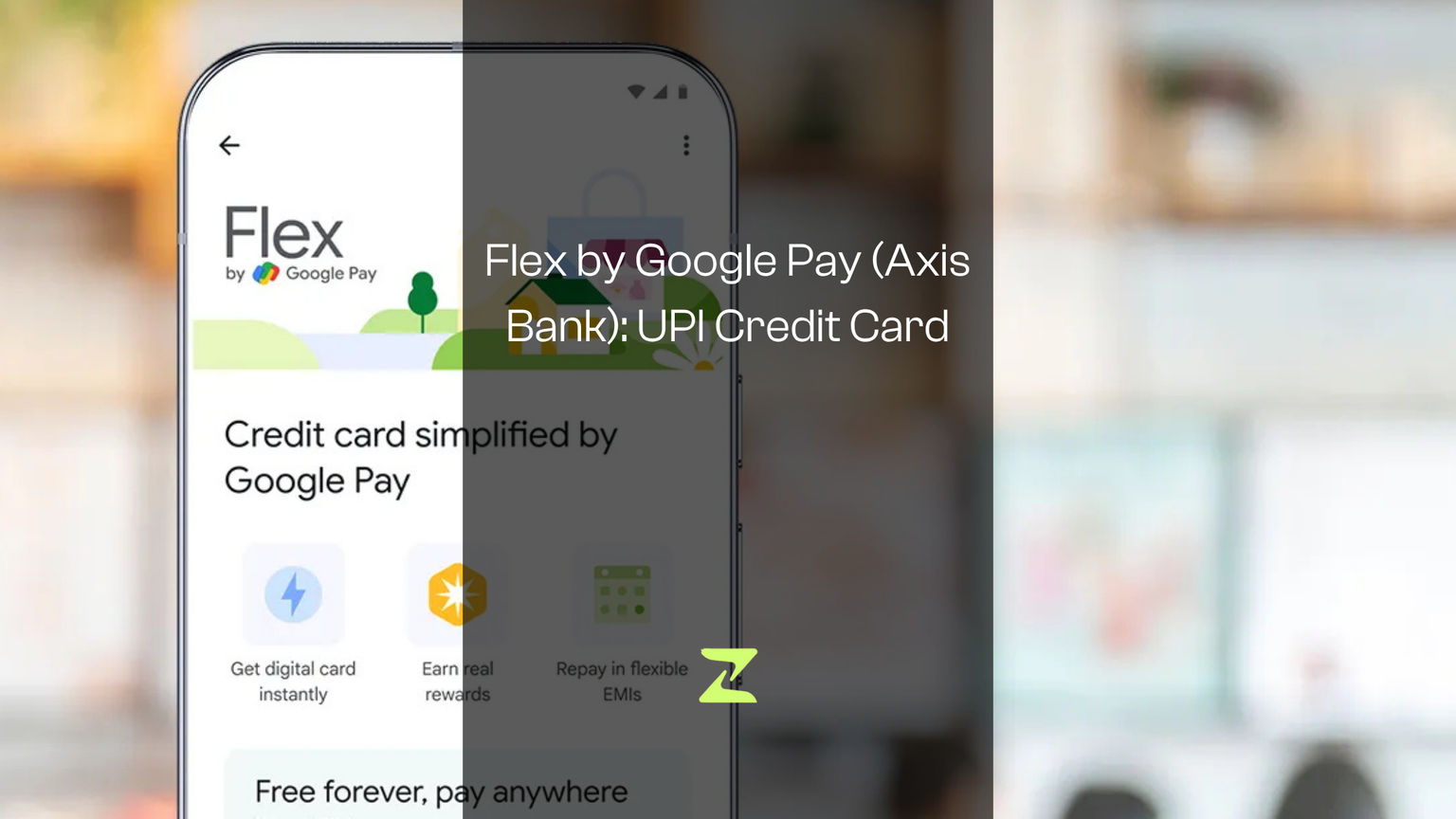
Google Pay and Axis Bank have introduced Flex by Google Pay, a fully digital co-branded credit card built on the RuPay network and integrated with the Unified Payments Interface (UPI). It launched first on December 17, 2025, in partnership with Axis Bank. (blog.google)
About The Flex Axis UPI Credit Card

- Issuer & Network: Axis Bank; RuPay network.
- Form: Fully digital via Google Pay app; no physical paperwork; card lives virtually in the app.
- Rewards: Earn “Stars” on every eligible transaction; 1 Star equals ₹1; redeemable instantly.
- Flexible Repayment: Option to pay the bill in full or convert eligible bills into EMIs.
- In-App Controls: Block/unblock card, reset PIN, set transaction limits; view spends and bills in real-time.
- Fees: No joining fee or annual fee for primary card, as per this Indian Express article.
- Finance Charges (Interest): 3.75% per month ( compounding to ≈ 55.54% per annum) on retail purchases & cash.
- Late Payment Charge: Variable: Nil if total due is ≤ ₹500; ₹500 if ₹501-5,000; ₹750 if ₹5,001-10,000; ₹1,200 if > ₹10,000.
- Eligibility: Individuals 18–70 years old; residents of India.
Stars are valid for one year from the date of issuance. Stars also cannot clear an entire bill; at least ₹1 must be paid in cash.
Rent, cash withdrawals, financial institution payments, insurance, education, government payments, wallet loads, and jewellery/watch stores do not earn Stars.
There's no joining or annual fee on Google Axis Felex Credit Card currently, which puts it alongside the other zero-fee RuPay cards worth holding.
Updated 7 August 2026: Flex is now a family of cards, not a single product. On 29 July 2026, Google Pay launched a second co-branded card with SBI Card, called the Google Pay Flex SBI Card. It runs the same Stars reward ladder as this Axis card, adds a Visa network option, and charges ₹499 plus GST as a joining and annual fee. This page covers the Axis Bank card only. For the SBI version and a full comparison of the two, read our breakdown of the Google Pay Flex SBI Card launch, fees and reward maths.
What’s So Special About Google’s First Credit Card?
Welcome Benefit | 2 Stars on eligible spends of ₹500 in the first rewards cycle; a ₹250 gift card plus 250 Stars on Google Pay app (offer-based). |
Tiered Rewards |
|
Dining Benefit | Up to 15% off via EazyDiner, capped at ₹500 per month. |
EMI Conversions | Convert eligible transactions of ₹2,500+ into EMI; charges and eligibility determined by Axis Bank. |
Transaction Fees & Forex Usage |
|
Card Replacement, Miscellaneous Fees | Primary card replacement fee: Nil; duplicate statement: waived; many standard service fees waived. |
Why Google Thought of Launching This Card in India?
According to Google, India has about 50 million active credit card holders, which is fewer than many countries of similar economic size. The Flex card addresses what Google calls “under-penetration” of transactional credit, i.e., daily spending on credit cards, compared to larger personal loans.
The product launches against a backdrop of existing co-branded credit card competition. Companies like Amazon, Flipkart, PhonePe, etc., already have similar offerings. Flex by Google Pay ties ubiquitous UPI usage with credit card functionality.
What This New UPI Card by Google Means for Users?
- If you are comfortable with digital payment tools and UPI, Flex may reduce friction by keeping everything in one app.
- No annual or joining fee lowers the cost of entry, especially for first-time cardholders.
- High finance charges (≈ 55.5% p.a.) mean paying balances in full or converting into EMI should be considered to manage costs.
- Reward-rich users: the ones spending enough to unlock higher tiers can benefit more; casual users may get fewer rewards. Promotional tiers (4×/8×) are temporary.
Axis Flex or SBI Flex: Which one should you apply for?
Google now issues Flex through two banks, and the reward engines are close to identical. Both start at 2 Stars per ₹500 in practice, both step up to 4 Stars per ₹500 above ₹15,000 of monthly spend, and both reach 8 Stars per ₹500 above ₹30,000. Best case on either card is 1.6% back.
The Axis card is currently lifetime free. The SBI card charges ₹499 plus GST, waived if you spend ₹1 lakh in the preceding year, and pays a ₹1,000 welcome benefit against the Axis card's ₹500.
That leaves you a first-year bonus on the SBI card, but the Axis one still has a permanent cost advantage. What the ₹499 buys is a Visa variant and a second issuer to apply through if Axis declines you. Note that choosing Visa removes the UPI linkage, which is the main reason to hold a Flex card at all.
The Google AI Plus discount and Pixel offers Google announced in July apply to every Flex customer, including holders of this Axis card. They aren't a reason to pay the SBI fee.
Our recommendation stands: apply here first, and treat the Google Pay Flex SBI Card as the fallback.
Monzy’s Take on This Credit Card
This card reflects a broader trend of integrating credit into payments-first applications. By combining UPI’s ubiquity with virtual credit, Google Pay and Axis Bank are targeting users who transact digitally but have avoided traditional credit cards.
The pricing signals risk-adjusted credit for consumers: low upfront fees, but steep interest rates if payments are deferred. For many users, Flex could be a low-cost way to experiment with credit—provided they use it responsibly.
What You Should Watch Out For Before Applying?
- How widely the card is rolled out beyond the initial waitlist; which states or PIN codes it will reach first. If the Flex card isn't available, you can check the Axis ACE Credit Card, too.
- Whether more issuers join Flex by Google Pay beyond Axis Bank, altering competitive dynamics.
- How effectively in-app tools for security and spending control work in practice?
- Which spending patterns unlock promotional tiers; how sustainable and valuable those rewards are.
Should you apply for the the Google Flex Credit Card?
If you're based in India and are a regular user of UPI and Google Pay, Flex offers an attractive, low-cost way to access credit for everyday spending.
The absence of joining or annual fees, combined with instant rewards and digital-first experience, lowers barriers to get this card. However, carrying a balance can be expensive due to high interest rates and late-payment fees.
About the Author

Anmol Ratan Sachdeva
Anmol has been tracking the Indian credit card market since 2019, reviewing benefits, changes across 40+ cards and documenting issuer devaluations in real time. He personally has a card portfolio across HDFC, Axis, SBI Card, ICICI, and writes from direct usage experience. His analysis focuses on real-world return calculations rather than headline reward rates. He writes content for educational purposes.