Times Black ICICI Credit Card Review: Where this Premium Metal Card Misses the Mark?
Last updated on
What does Times Black hide behind a flashy lifestyle website? Let's dig in and find out.
Too busy to read endless reviews & research?
Find the best cards that suit your lifestyle in 30 seconds
Try Monzy NowNo signup or email required
Last month, I was at a restaurant where the person at the next table pulled out what looked like a small shiny metal card to pay the bill. That was my first real-world encounter with the Times Black ICICI Credit Card, and honestly, it made me curious enough to dig deeper.
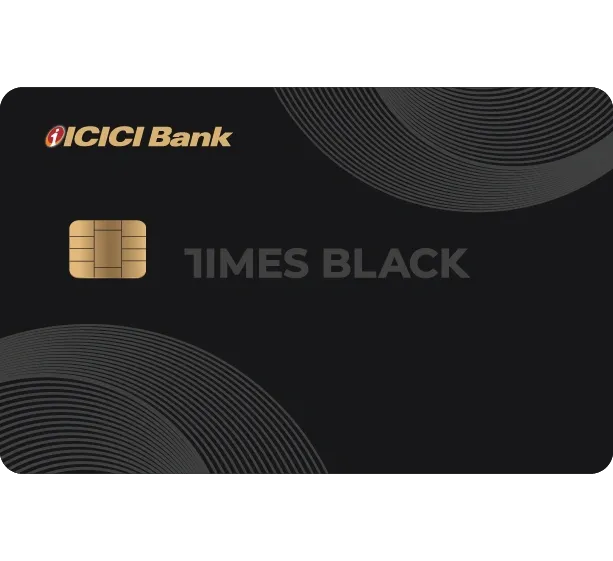
What I found after weeks of research wasn't what I expected. This isn't going to be another glowing review praising luxury lifestyle benefits.
As someone who's been using credit cards responsibly for years now, I believe in calling things as they are. The Times Black card represents everything I'm skeptical about in India's premium credit card space.
I'm not here to sell you on status symbols or convince you that metal equals value.
My approach to credit cards has always been conservative and practical. Today, I'll share my honest assessment of whether this premium offering makes financial sense for real Indian spenders.
First Impressions: The Metal Card Mystique
The physical presence of the Times Black card is undeniably impressive.
At nearly four times the weight of a regular plastic card, it feels substantial in your hand. The marketing story behind it is clever, too. ICICI Bank claims the inaugural card’s metal is infused with material from The Times of India's original printing plates, connecting modern luxury with historical significance.
But here's what I noticed during my research.
The Times Black website reads more like a luxury lifestyle magazine than a financial product page. There's extensive focus on helicopter transfers, curated travel experiences, and exclusive event access.
What's harder to find upfront are the actual costs, eligibility requirements, and practical benefit calculations. This immediately raised red flags for me.
In my experience, when credit card companies lead with lifestyle imagery instead of transparent fee structures, it usually means the math doesn't work out favorably for most applicants.
Setting Realistic Expectations
I've learned to judge credit cards by their mathematical value, not their marketing materials. A metal card that costs you more than it saves isn't a premium product. It's an expensive mistake.
The weight of the card in your wallet shouldn't outweigh the weight it puts on your finances.
My rule is simple: if a credit card company spends more time talking about lifestyle than listing clear benefits and costs, approach with caution. The Times Black marketing strategy feels designed to appeal to aspirational spending rather than practical financial management.
Breaking Down the Core Features Beyond the Marketing Hype
Airport Lounge Access Reality Check
The Times Black promises unlimited access to 1300+ airport lounges worldwide. Sounds impressive until you do the math. Most Indians, even frequent travelers, visit maybe 2-3 different lounges per year.
I've tracked my own travel patterns over the past five years, and even with 8-10 domestic trips annually, I rarely use more than 4-5 lounge visits.
At roughly ₹2,000 per lounge visit value, you'd need 15-20 visits annually just to justify the card's fees through lounge access alone. That's unrealistic for 95% of Indian travelers.
The 1.49% foreign currency conversion fee is competitive, I'll give them that.
My current international spending card charges approx 3.5%, so there's genuine savings potential here. But this benefit only matters if you're spending significant amounts internationally.
For someone spending ₹2 lakh abroad annually, the savings would be around ₹4,200 compared to standard cards.
The premium airport transfers and helicopter services sound exciting in marketing materials, but let's be realistic. I've never met anyone who regularly uses helicopter transfers for airport commutes in India.
The practical value of sedan transfers might save you ₹500-800 per airport trip, but again, you need frequent travel to make this worthwhile.
ICICI Sapphiro and ICICI Rubyx Credit Card may be better alternative cards.
Lifestyle Services Deep Dive
The CribLife concierge service promises exclusive restaurant reservations and event access.
A friend who has access to similar premium concierge services through another card told me the reality is mixed. Yes, they can get reservations at popular restaurants, but so can calling directly or using apps like Zomato Gold for most places that matter.
Doorstep visa services offer convenience, but the cost savings aren't significant. Having been involved in processing of multiple visa applications, the DIY approach through VFS or embassy websites costs roughly the same and gives you more control over timing and documentation.
Times Black not your fit? get a personalised credit card recommendation →
Shopping and Rewards Structure
The accelerated rewards on iShop platform sound appealing until you realize the limited merchant network. I prefer simple cashback systems like my Amazon ICICI card, which gives me 5% back on Amazon purchases without jumping through hoops or navigating complex reward redemption processes.
Complex reward systems often benefit the card company more than the customer. I've learned to value straightforward cashback over points that expire or require minimum redemption thresholds.
The Real Cost Analysis: What They Don't Tell You Upfront
Here's where things get interesting. The Times Black website doesn't clearly state the annual fee structure upfront, which is always a warning sign in my book.
The costs (annual and renewal) is around ₹20,000 + GST. For a card with this cost, the benefits should be phenomenal, right?
Let’s break down the cost vs benefit ratio.
My Cost-Benefit Framework
I calculate credit card value using a simple formula: Annual benefits received minus annual fees paid.
For the Times Black to make sense, you'd need to extract at least ₹20,000-30,000 in annual value through:
- 15+ international lounge visits
- ₹5+ lakh international spending (for forex savings)
- Regular use of premium transfer services
- Consistent high-value concierge service usage
The eligibility requirements likely include income criteria of ₹25+ lakh annually, based on similar premium cards in the market. This immediately excludes most Indian credit card applicants, who earn significantly less.
My total annual credit card expenses across 3-4 cards currently amount to about ₹3,000 in fees, generating roughly ₹25,000 in cashback and benefits.
The Times Black alone would likely cost more than my entire current card list twhile delivering questionable additional value for my spending patterns.
Who This Card Actually Serves (And Who Should Avoid It)?
The Ideal Times Black Customer
After analyzing the features, the Times Black makes sense for a very specific customer profile.
You'd need to be someone who travels internationally 10+ times annually, regularly entertains guests at premium venues, and values convenience over cost optimization.
And when you're overseas, decline DCC to protect your forex advantage.
Business owners who can expense the annual fee and use the card for client entertainment or corporate travel might find genuine value. The status factor also matters in certain business contexts where perception influences deals.
Red Flags: When This Card Doesn't Make Sense
Avoid This Card If You:
- Are applying for your first premium credit card
- Primarily spend domestically within India
- Prefer cashback over complex reward systems
- Watch every rupee of personal expenses
- Travel less than 6 times internationally per year
- Already have a premium card that meets your needs
I fall into several of these categories. My spending is primarily domestic, I value simple cashback systems, and I'm cost-conscious about credit card fees. The Times Black would be a poor fit for my financial habits and lifestyle.
My Alternative Recommendations
For international travelers seeking premium benefits, I'd suggest researching HDFC Infinia or Axis Magnus cards first.
Both have established track records and clearer value propositions. For luxury spenders focused on domestic benefits, cards like SBI Elite or ICICI Sapphiro might offer better practical value.
For beginners wanting to build toward premium cards, start with reliable options like Amazon ICICI or HDFC Millennia. Build your credit history with cards that offer immediate practical value rather than aspirational lifestyle benefits.
Comparing with My Existing Credit Card
My Amazon ICICI card costs me nothing annually and generates about ₹10,000+ in cashback through regular Amazon purchases and bill payments. It's simple, transparent, and delivers immediate value.
The Times Black would need to generate 40-50 times more value to justify its likely fee structure for me.
The HDFC Infinia, targeting a similar premium market, offers more transparent rewards and established merchant acceptance. Most importantly, it has a proven track record and active user community sharing real experiences online.
The Middle Ground Options
For readers interested in premium benefits without extreme costs, consider semi-premium cards that offer 80% of the benefits at 50% of the cost.
Cards like ICICI Sapphiro or HDFC Regalia provide solid travel benefits, lounge access, and reward programs without the ultra-premium price tag.
Building credit history with these middle-tier options makes more sense for most people. You can always upgrade to ultra-premium cards later when your income and spending patterns justify the costs.
Real User Experiences and Market Reality about Times Black ICICI Credit Card
One concerning aspect of researching the Times Black card is the limited real user feedback available online.
Unlike established premium cards with active discussion forums and detailed user reviews, the Times Black has minimal organic conversation around it.
This could be because it's relatively new, or because the target market doesn't typically share experiences on public forums. Either way, the lack of peer reviews makes it harder to validate the marketing claims with real-world experiences.
I've also noticed concerns about merchant acceptance. New premium cards sometimes face acceptance issues, especially at smaller merchants who haven't updated their systems. This can be frustrating when you're trying to use a premium card that merchants don't recognize or accept.
Market Positioning Concerns
The Times Black represents The Times Group's entry into credit cards, partnering with ICICI
Bank for the financial infrastructure. While both companies have strong reputations in their respective fields, credit cards require different expertise than media or traditional banking.
I prefer credit cards from issuers with established premium card portfolios and proven customer service track records. The learning curve for new premium card programs can result in service gaps that affect customer experience.
My Final Verdict and Practical Advice
After thorough analysis, I cannot recommend the Times Black card to most of my readers.
The value proposition doesn't align with practical Indian spending patterns, the costs likely outweigh the benefits for typical users, and better alternatives exist in the premium card space.
This card appears designed for a very specific ultra-high-net-worth segment that values exclusivity over optimization. If you're part of that segment and the annual fee doesn't impact your financial planning, the Times Black might provide the status and services you're seeking.
My Personal Decision
Would I apply for this card? Honestly, no.
My current card serves my needs efficiently at a fraction of the likely cost. I prioritize practical benefits over premium positioning, and the Times Black doesn't offer compelling advantages for my spending patterns.
What would change my mind? Transparent fee structure, proven customer service track record, and clear value demonstration for middle-class professional spending patterns. Until then, I'm sticking with my proven, cost-effective card selection.
Questions to Ask Yourself Before Applying for Times Black ICICI Credit Card
- Do I travel internationally more than 10 times annually?
- Can I easily afford the annual fee without impacting other financial goals?
- Do I regularly use premium lifestyle services?
- Have I maximized value from existing credit cards?
- Am I applying for status or genuine financial benefit?
Smart Money Moves Over Status Symbols
The Times Black ICICI Credit Card represents the premium end of India's credit card market, but premium doesn't automatically mean better value. For most Indian consumers, the costs likely outweigh the benefits, and simpler alternatives provide better practical value.
My approach to credit cards remains unchanged: choose tools that enhance your financial position rather than drain it.
Know your spending patterns, understand the true costs, and select cards that align with your practical needs rather than aspirational desires.
If you're considering premium credit cards, start by evaluating your current card portfolio and identifying genuine gaps in benefits or services. Often, the best financial decision is optimizing what you already have rather than adding expensive new products.
Frequently Asked Questions
What is the annual fee for the Times Black ICICI Credit Card?
The official annual fee isn't clearly stated on the Times Black website, which is concerning. Based on the official ICICI page, the cost comes at around ₹20,000 annually + GST.
Who should consider applying for this card?
The Times Black makes sense for high-income individuals who travel internationally frequently (10+ times annually), regularly use premium lifestyle services, and can easily afford the annual fee without impacting other financial goals. It's not suitable for most middle-class professionals.
How does it compare to other premium cards like HDFC Infinia?
HDFC Infinia has a proven track record, established customer service, and an active user community. The Times Black is newer with limited real-world feedback. For premium card selection, I prefer options with demonstrated performance over newer entrants.
Is the metal card worth the premium cost?
Metal construction doesn't inherently provide financial value. Judge credit cards by their mathematical benefits versus costs, not by physical materials or status appeal. A plastic card that saves you money is superior to a metal card that costs you money.
What are better alternatives to premium credit cards in India?
You can consider HDFC Infinia, Axis Magnus, or SBI Elite for established premium options. For semi-premium benefits at lower costs, explore ICICI Sapphiro or HDFC Regalia. Start with practical cards like Amazon ICICI to build credit history before considering ultra-premium options.
Should I apply for this as my first premium credit card?
No. Build credit history with simpler, proven cards first. Master responsible credit usage and understand your spending patterns before considering premium options. The Times Black is particularly unsuitable as a first premium card due to its complexity and likely high costs.
About the Author

Anmol Ratan Sachdeva
Anmol has been tracking the Indian credit card market since 2019, reviewing benefits, changes across 40+ cards and documenting issuer devaluations in real time. He personally has a card portfolio across HDFC, Axis, SBI Card, ICICI, and writes from direct usage experience. His analysis focuses on real-world return calculations rather than headline reward rates. He writes content for educational purposes.