Google Pay Flex SBI Card Launched: ₹499 Fee, Stars Rewards, RuPay & Visa (2026)
Last updated on
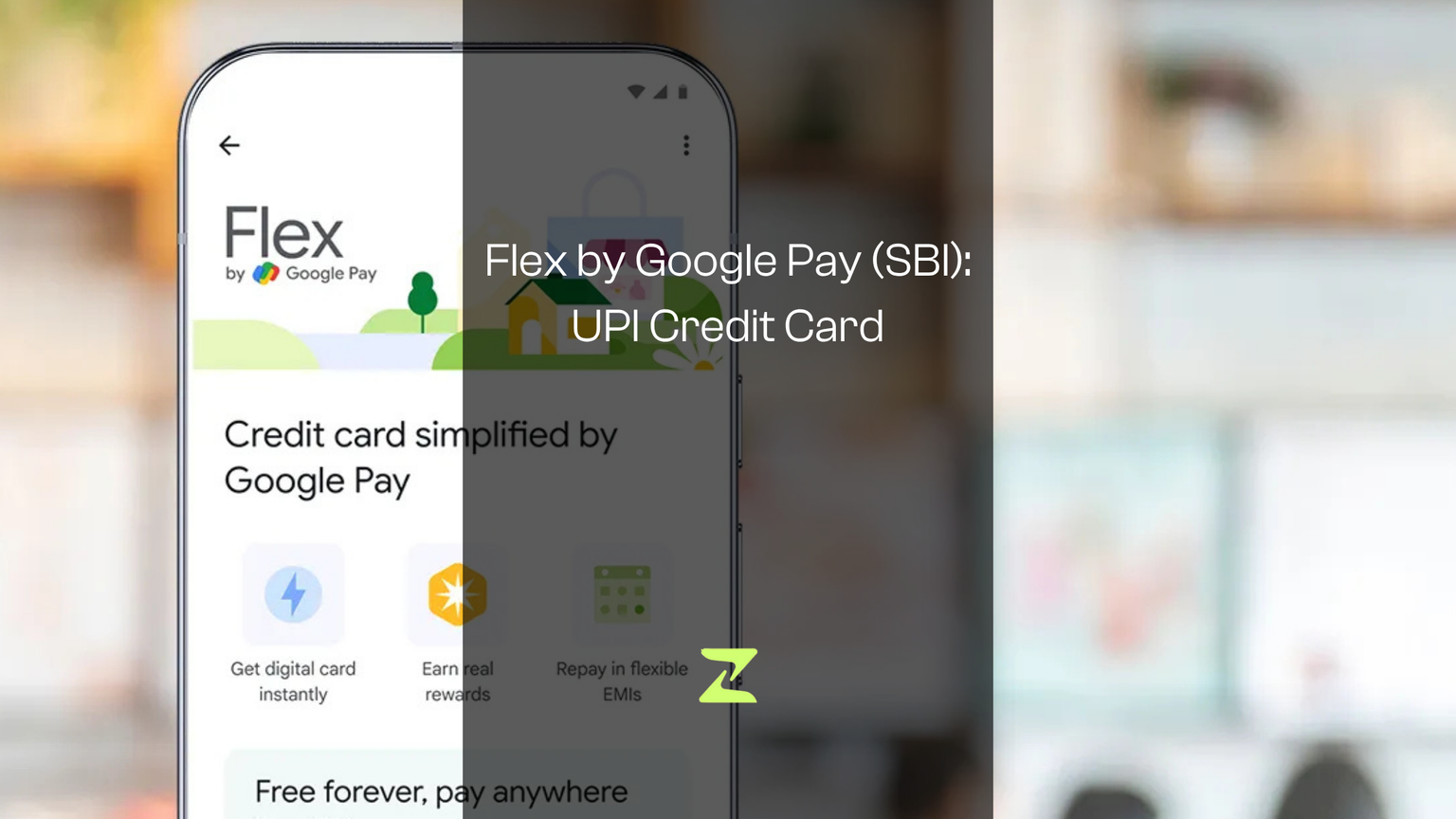
SBI Card and Google Pay launched the Google Pay Flex SBI Card on 29 July 2026. ₹499 + GST fee waived at ₹1 lakh spend, Stars worth up to 1.6% back. We ran the maths on the ₹18,000 rewards claim.
Too busy to read endless reviews & research?
Find the best cards that suit your lifestyle in 30 seconds
Try Monzy NowNo signup or email required
Google Pay and SBI Card have officially launched the Google Pay Flex SBI Card. It’s designed for users who prefer making everyday payments through the Google Pay app. And it’s the second Google Pay co-branded card in India after the one launched with Axis Bank seven months ago.
Priced at an affordable ₹499 annual fee, it offers a fee waiver on eligible spending and a welcome benefit for new users. It aims to compete in the growing entry-level rewards credit card segment.
Let’s see whether it's worth applying for in 2026.
TL;DR
- SBI Card and Google announced the Google Pay Flex SBI Card on 29 July 2026.
- Charges ₹499 plus GST as both a joining fee and an annual renewal fee.
- Fee is waived if you spend ₹1 lakh in the preceding year.
The card earns Stars, Google Pay's reward currency, where 1 Star equals ₹1, and it tops out at 8 Stars per ₹500 spent. However, to collect the advertised “rewards worth up to ₹18,000 annually,” you would need to spend roughly ₹11.25 lakh a year on eligible transactions
Our verdict, stated upfront: if you can get approved for the Axis Bank version of Flex, take that one instead. It earns at the same rate and currently carries no joining or annual fee.
What SBI Card and Google announced
Attribute | Google Pay Flex SBI Card |
|---|---|
Issuer | |
Launch date | 29 July 2026 |
Networks | RuPay and Visa (RuPay variant links to UPI) |
Joining fee | ₹499 + GST (₹589 all-in) |
Renewal fee | ₹499 + GST, waived on ₹1,00,000 annual spend |
Reward currency | Stars, 1 Star = ₹1 |
Base earn rate | 2 Stars per ₹500 spent; 4 Stars, above ₹15,000 monthly spend; 8 Stars, above ₹30,000 monthly spend |
Annual reward ceiling | 18,000 Stars |
Welcome benefit | ₹1,000, split as ₹500 after your first Google Pay payment and ₹500 in Stars after the joining fee clears |
Apart from these, two extras apply to every Flex cardholder (both SBI and Axis).
Google said Flex customers will get the Google AI Plus plan at 50% off for a year, and a discount across the Pixel smartphone range. (source)
The ₹18,000 claim, worked out
The maximum earn rate is 8 Stars per ₹500, which works out to 1.6% back. Stars are worth a clean ₹1 each and redeem instantly inside the app. But to collect 18,000 Stars at 1.6%, you need ₹11,25,000 of eligible spend across the year. Divided by twelve, that’s ₹93,750 every single month, in the top tier, without a gap.
Stars are essentially reward points, and our guide on reward points versus cashback compare both methods of earnings and when each one wins.
Compare that to the threshold the card advertises.
You reach the 8X tier at ₹30,000 of monthly spend. Someone who sits exactly at that threshold spends ₹3.6 lakh a year and earns ₹5,760 in Stars. That's a perfectly good outcome for a card at this fee level. But it’s also roughly a third of the number of the promised rewards.
If you’re earning ₹50,000 a month, check our best credit cards on a ₹50,000 salary shortlist.
Exclusions also contribute to diminishing rewards. Rent, cash withdrawals, insurance premiums, education, government payments, wallet loads and jewellery purchases earn no Stars at all. Our merchant category code (MCC) list for India shows you how to check exclusions before you pay.
So the ₹18,000 figure is a ceiling that’s hard to reach for many users. The ₹1L fee-waiver threshold is further away as well.
What the ₹499 actually buys you
Flex by Google Pay (Axis Bank) | Google Pay Flex SBI Card | |
|---|---|---|
Launched | 17 December 2025 | 29 July 2026 |
Joining fee | Currently waived | ₹499 + GST |
Annual fee | Currently waived | ₹499 + GST, waived at ₹1L spend |
Networks | RuPay only | RuPay or Visa |
Base rate | 1 Star per ₹500, rising to 2 per ₹500 once you spend ₹100 in the prior cycle | 2 Stars per ₹500 |
4X tier | ₹15,000 monthly spend | ₹15,000 monthly spend |
8X tier | ₹30,000 monthly spend | ₹30,000 monthly spend |
Best-case rate | 1.6% | 1.6% |
Welcome benefit | ₹250 gift card + 250 Stars | ₹1,000 |
The reward ladders are the same for both Google Pay Flex Axis Credit Card and Flex SBI Card. The tier thresholds sit at the same ₹15,000 and ₹30,000; and the best-case rate on both is 1.6%. Once you clear the trivial ₹100 prior-cycle condition on the Axis card, even the base rate matches.
What you get for ₹499 is the option of a Visa variant, plus a second issuer to apply through if Axis turned you down. The welcome benefit is ₹500 richer, which covers the first year's fee and leaves you ahead by about ₹411.
From year two onward, you are paying ₹589 for a product available free via Axis, unless you cross ₹1 lakh of spend.
Be careful with the Visa option, though. While it’s being marketed as flexibility, it costs you UPI linking. Only the RuPay variant links to UPI, and that linkage is the entire reason this product exists. Confirm which network you are being issued at the application screen.
The ₹1 lakh waiver threshold looks easy at ₹8,334 a month, but you sit below the ₹15,000 gate at that spend level. You’ll be earning 0.4%, which is ₹400 a year on ₹1 lakh of spending. Essentially, you’re spending ₹1 lakh to avoid a ₹589 fee and collecting ₹400 for the trouble.
One more thing worth factoring in before you commit to a fee: SBI Card revises reward structures often. SBI Cashback Card devaluation in April 2026 and the PhonePe SBI reward cap cuts both landed within a year of those products becoming popular. So, the Stars you're signing up for today aren't contractually locked for the life of the card.
Our credit card annual fee waiver guide covers when a waiver is worth chasing and when it quietly costs you.
Cards that beat this for the same money
If UPI-linked credit is what you want, several stronger options are available. We have a running list of RuPay credit cards that work well for UPI payments. Here are our top picks.
The HDFC Bank UPI RuPay Credit Card charges ₹99 and returns up to 3% on groceries, dining and utilities. The catch is a ₹99 redemption fee per request and a 2,000 CashPoint minimum before you can redeem against your statement.
The Kotak UPI RuPay Credit Card carries no fee and returns a flat 0.75%, with rent, fuel, wallet loads and EMI spends excluded. Lower ceiling than Flex, higher floor, and nothing to pay. The Kiwi RuPay credit card is also an alternative, with cashback rather than Stars.
The Tata Neu Plus SBI Card charges the same ₹499 and reaches 7% on Tata Neu transactions against a 2% base. If your household buys from BigBasket, Croma, Westside or 1mg, That's a better use of the same fee, and the Tata Neu Infinity SBI Card goes further at ₹1,499. You can explore SBI Card's wider portfolio for other cards.
The Amazon Pay ICICI Credit Card has no fee and returns 5% on Amazon for Prime members, credited straight to Amazon Pay balance.
If a fee of any size makes you uneasy, our list of zero-fee credit cards in India is the right starting point.
FAQs about Google Pay Flex SBI Card
What is the Google Pay Flex SBI Card?
It's a co-branded credit card from SBI Card and Google Pay, launched on 29 July 2026. It costs ₹499 plus GST as both a joining and annual fee, and earns Stars – Google Pay's reward currency, where 1 Star equals ₹1 – on eligible spends. It's the second Google Pay Flex card in India, after the Axis Bank version that launched in December 2025.
What is the annual fee, and how do you get it waived?
The fee is ₹499 plus GST, which works out to ₹589 all-in. It's waived if you spend ₹1,00,000 in the preceding year. That threshold sounds easy at ₹8,334 a month, but at that spend level you sit below the ₹15,000 monthly gate, so you'd earn only about ₹400 in Stars across the year. You'd be spending ₹1 lakh to dodge a ₹589 fee and collecting ₹400 for it.
How many Stars does the card actually earn?
The card has three Star tiers. You earn 2 Stars per ₹500 by default, 4 Stars per ₹500 once your monthly spend crosses ₹15,000, and 8 Stars per ₹500 above ₹30,000 a month. At the top tier that's 1.6% back. Stars are worth ₹1 each and redeemable at the point of payment inside Google Pay.
Is the "rewards worth up to ₹18,000 annually" claim realistic?
For most people, no. 18,000 Stars at the maximum 1.6% rate requires ₹11,25,000 of eligible spend across the year – ₹93,750 every month. Someone sitting exactly at the ₹30,000 monthly threshold spends ₹3.6 lakh a year and earns ₹5,760. That's a fine outcome for a ₹499 card, but it's about a third of the advertised figure.
Should you choose the RuPay or the Visa variant?
RuPay, unless you have a specific reason not to. Only the RuPay variant links to UPI, and UPI linking is the entire reason this product exists. The Visa option is marketed as flexibility, but it costs you the one feature that makes a Flex card worth holding. Confirm at the application screen which network you're being issued.
Which is better – the Axis Flex or the SBI Flex?
The Axis one, for most people. The reward ladders are identical, the tier thresholds sit at the same ₹15,000 and ₹30,000, and the best-case rate on both is 1.6%. The Axis version currently carries no joining or annual fee. The SBI version costs ₹589 all-in and gives you a Visa variant and a second issuer to apply through if Axis declined you. Apply to Axis first.
Which spends don't earn Stars?
Rent, cash withdrawals, insurance premiums, education payments, government payments, wallet loads and jewellery purchases all earn nothing. These are filtered by merchant category code, so it's worth checking the MCC of a large recurring payment before you assume it counts toward either your Stars or your ₹1 lakh fee-waiver threshold.
What is the welcome benefit worth?
₹1,000, split in two: ₹500 after your first Google Pay payment on the card, and ₹500 in Stars once the joining fee clears. Against the ₹589 all-in fee, that leaves you roughly ₹411 ahead in year one. From year two onwards, you're paying ₹589 annually for a reward engine that's available free through Axis Bank, unless you cross ₹1 lakh of spend.
Can you hold both the Axis and the SBI Flex cards?
There's no rule stopping you, since they're issued by different banks. But there's very little reason to do so. The reward ladders are the same, and the tiers are calculated per card, so splitting spend across both makes it harder to reach the ₹15,000 and ₹30,000 monthly milestones on either one. Two Flex cards will usually earn you less than one Flex card carrying all the spend.
Do the Google AI Plus and Pixel offers apply to this card?
Yes, and to the Axis card too. Google said Flex customers get the Google AI Plus plan at 50% off for a year plus a discount across the Pixel range. Because both issuers' cardholders qualify, these perks aren't a reason to pay SBI's ₹499 when the Axis card gives you the same access for nothing.
Our verdict
For most people, this is a card to skip. Not because it’s a bad product. The instant redemption at the point of payment removes the most annoying part of Indian credit card rewards, and 1.6% on UPI spending is competitive.
The problem is that the identical reward engine is already available on a card that costs nothing.
However, if Axis Bank declined you and SBI Card approves you, Google Pay Flex SBI Card can be your route into the Flex ecosystem. It’s worth ₹589 in year one against a ₹1,000 welcome benefit. You can also take it if you already bank with SBI and want to maintain a relationship with one issuer.
Before you apply a second time, it's worth reading why credit card applications get rejected – a second hard enquiry inside 30 days makes the third application harder still.
Everyone else should apply for the Axis version, choose RuPay, and put their UPI spending on it.
Disclaimer
This is our honest read, not formal financial advice. Card terms change, and promotional reward tiers change faster. Verify current terms with the issuer before you apply.
About the Author

Abhijeet Kumar
Abhijeet loves to spend money (on books mostly) and does deep dive content about latest credit cards, hacks, and what changed in the credit card ecosystem recently. In his free time, he loves to read financial advice and lots of fiction.