HSBC Live+ Revaluation (2026): New 10% Cashback MCCs, ₹1,200 Cap & What Actually Changed
Last updated on
HSBC has recently issued the full MCC list that shows which MCC codes earn 10% cashback on this card. Good news: Now you can earn more on same spends. Full details inside.
Too busy to read endless reviews & research?
Find the best cards that suit your lifestyle in 30 seconds
Try Monzy NowNo signup or email required
I got a pleasant surprise today morning when I noticed that HSBC has published a new MCC code list on their website.
If you hold the HSBC Live+ Credit Card, you know the last month has felt confusing.
First HSBC sent an email that quietly took things away. Then, weeks later, it sent a second email that gave back more than it took. This is unusual because banks devalue cards all the time in India. They rarely reverse course and then over-correct in your favour within a few weeks.
That is what happened here, and it changes the answer to the only question you actually care about: is this ₹999 card still worth carrying?
If you were annoyed by the June email, that was fair. If you skimmed the July email and assumed it was more bad news, that is understandable too. Most people did.
So here is the full picture, with the numbers worked out in front of you.
TL;DR: What changed with HSBC Live+ in 60 seconds?
HSBC Live+ now earns 10% cashback on shopping and utility bill MCCs, not just dining, food delivery and groceries.
- The monthly cashback cap rose from ₹1,000 to ₹1,200.
- The card moved from Visa Signature to Visa Infinite, adding one international lounge visit a year and some lifestyle perks.
- For a limited time, Myntra purchases will earn 10% cashback until 31 October 2026. After the offer period, Myntra purchases will earn 1.5% cashback.
- Amazon and Flipkart still earn only 1.5%.
The card still costs ₹999 + GST, waived on ₹2,00,000 annual spend. For an average household, this is a genuine upgrade.
The core change: 10% cashback now covers far more than food
Before this update, the Live+ earned 10% cashback only on three things: dining, food delivery and groceries.
Everything else earned a flat 1.5%. That meant if you did not eat out or order in much, a good chunk of your 10% headroom simply went unused every month.
From 26 July 2026, the 10% rate applies to a much wider set of merchant category codes, including:
- Utility bills under MCC 4900 (electricity, water, piped gas) and MCC 4814 (telecom: broadband, mobile postpaid and prepaid).
- Electronics stores under MCC 5732.
- A wide band of shopping MCCs, covering department stores, apparel, footwear, gift shops, florists, cosmetics, book shops, sporting goods and more.
This is the advantage of a cashback card over a points card: no conversion, no redemption portal, no devaluation risk on the currency itself. We broke the difference down in reward points vs cashback.
HSBC has published the complete list, and it runs to roughly 70+ eligible MCCs and 50+ excluded ones.
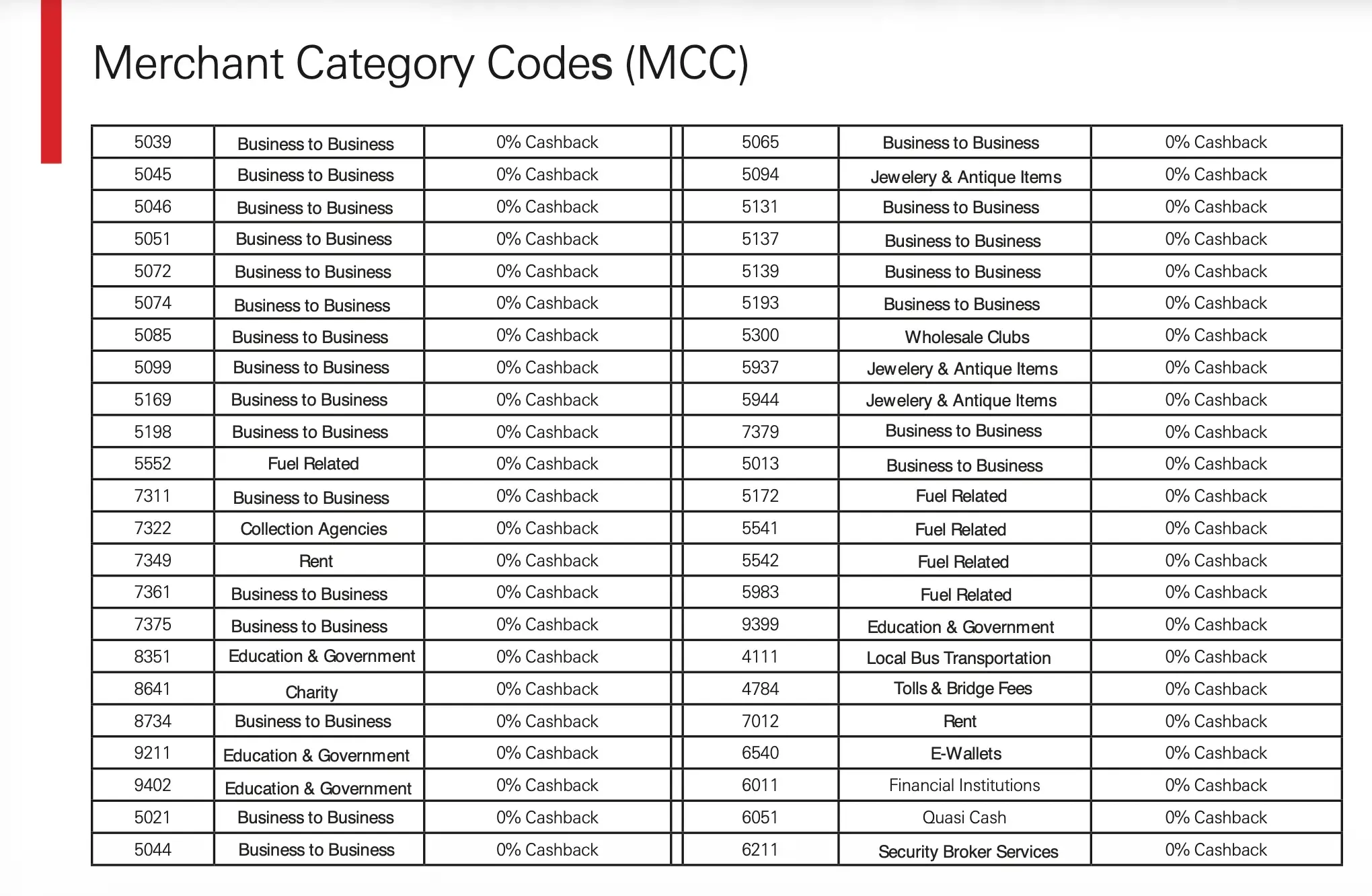
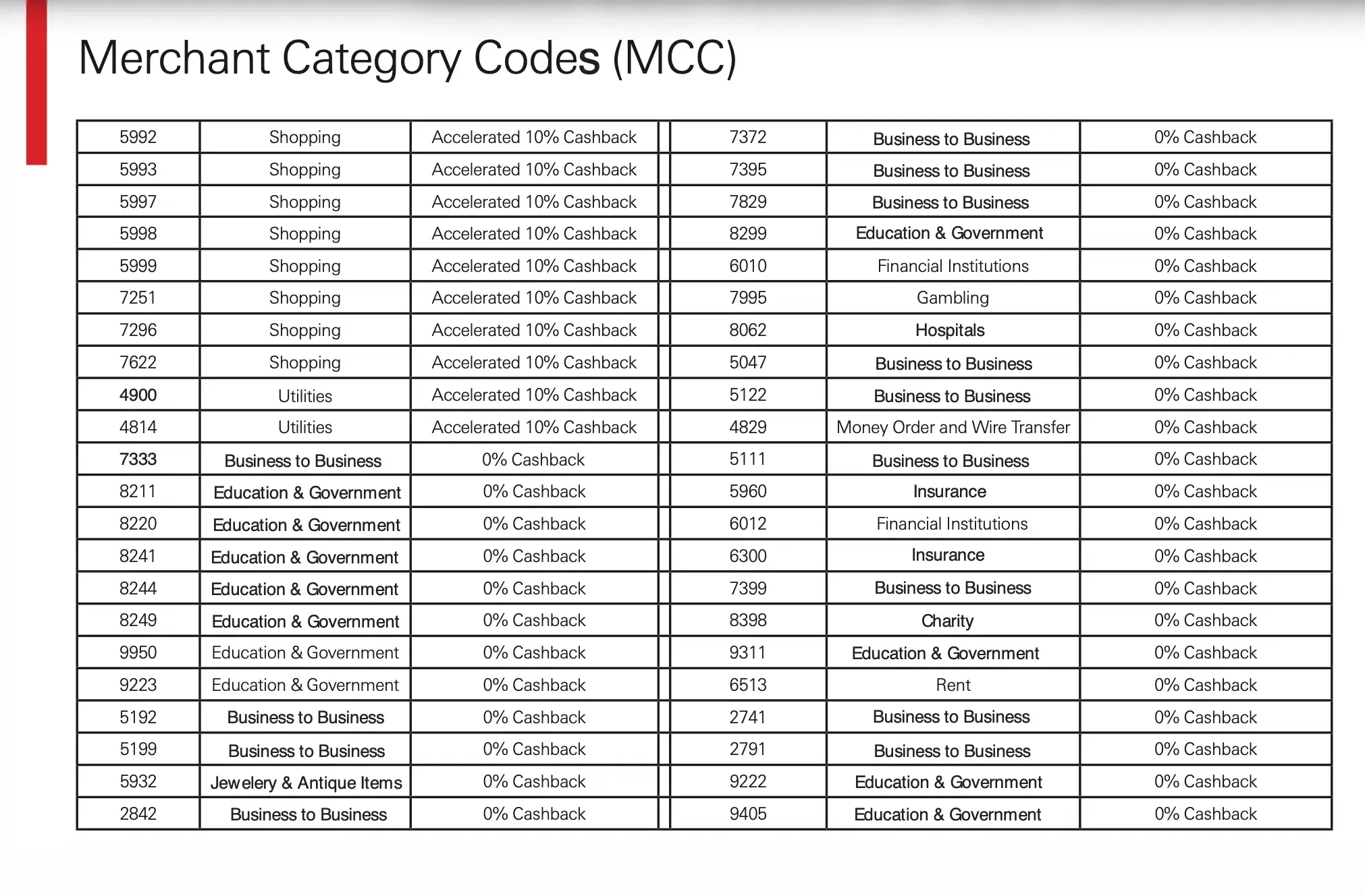
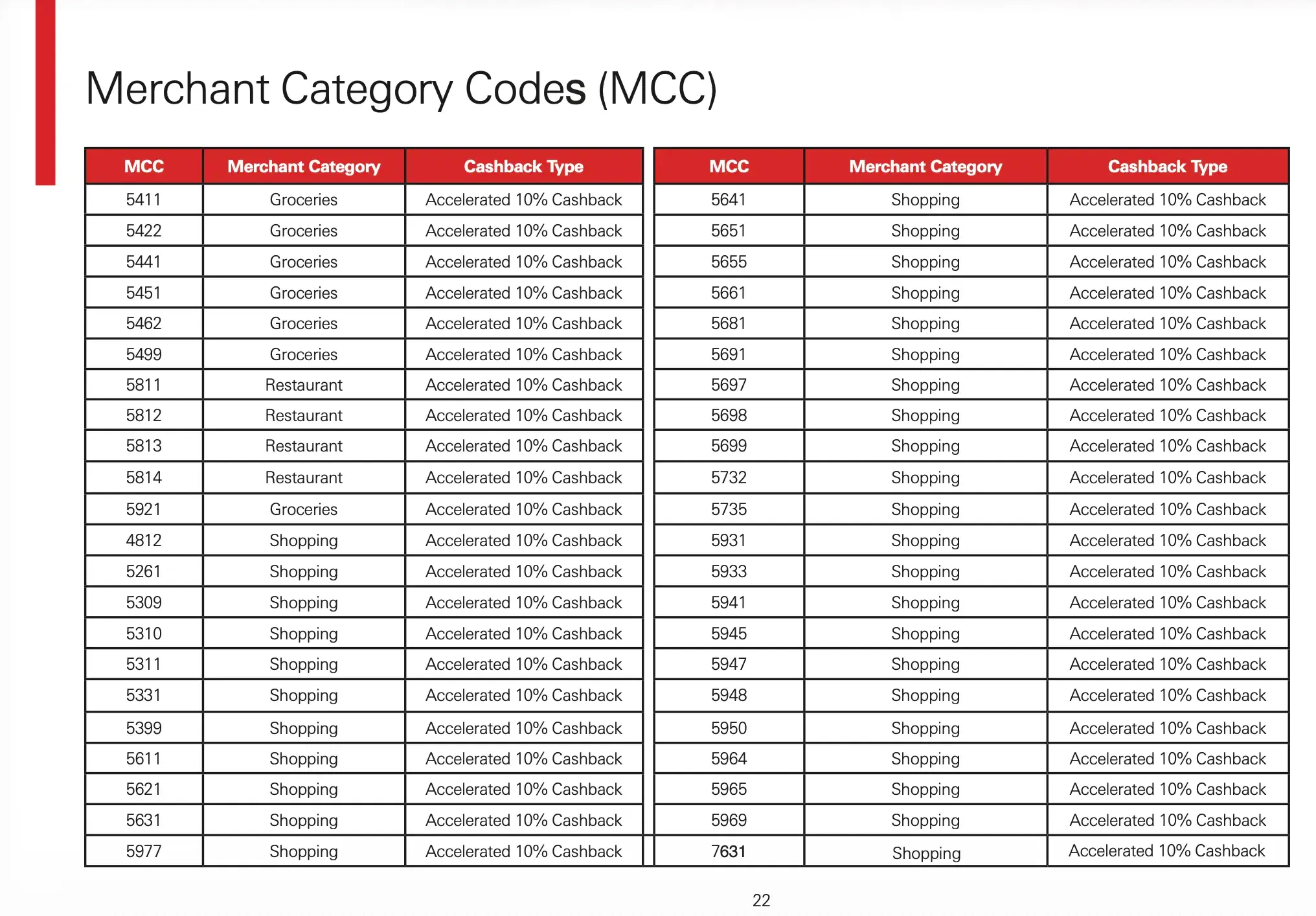
One thing this update does not change: the card decides eligibility by the merchant's MCC, not the brand name.
HSBC does not assign the MCC. The merchant's acquiring bank does. The same retailer can be coded differently across two outlets, which is why one grocery store earns you 10% and another does not.
So, treat every new merchant as a hit-and-try until your statement confirms the rate.
Also Read: Full list of MCC Codes in India 2026
A little backstory: a devaluation, then a revaluation
You need both halves to judge the card fairly, so here is what HSBC actually did.
The June devaluation (announced late June, effective 26 July 2026). HSBC told cardholders three things.
- The forex markup on international spends would drop from 3.5% to 1.99%, but the 1.5% cashback on international transactions would go away.
- Domestic lounge access would shrink from 4 visits a year to 2 a year, capped at 1 visit every six months.
- And two merchant categories would stop earning cashback: Hospitals (MCC 8062) and Local Bus/Subway Transit (MCC 4111). The community reaction was blunt.
- On the TechnoFino devaluation thread, one member wrote that pulling cashback on hospital spends crossed a line, because hospital bills are genuine, unavoidable family spends, not reward-chasing.
The July revaluation (announced early July, effective 26 July 2026).
Before that first change even took effect, HSBC sent a second email. This one expanded the 10% cashback categories, raised the cap, migrated the card to Visa Infinite, and added an international lounge visit and a fuel benefit.
We covered that first email in detail when it landed: what HSBC took away from the Live+ in June 2026, and the forex trade-off that came with it.
It was an unusual move, a devaluation quickly followed by a revaluation on the same effective date.
So the net position from 26 July 2026 is a mix.
You lose some travel and international value. You gain a lot more everyday cashback flexibility. For most cardholders, the second email matters far more than the first.
A reversal like this is unusual. Set it against every other Indian credit card devaluation in 2026 and you'll see why cardholders assumed the second email was more bad news.
Now the math: why the ₹1,200 cap?
Expanding the categories sounds unlimited. It is not.
The 10% cashback is capped at ₹1,200 per statement cycle. That single number governs almost everything about how you should use this card.
Work it backwards.
To earn the full ₹1,200 at a 10% rate, you need ₹12,000 of eligible spend in a billing cycle.
Hit that, and you have maxed the bucket. Every rupee of eligible spend beyond ₹12,000 that month earns you nothing extra in the 10% bucket.
Over a year, the 10% categories can return at most ₹14,400.
Compare that to the old ceiling.
The previous cap was ₹1,000 a month, or ₹12,000 a year. So the raise adds ₹200 a month, ₹2,400 a year, of extra headroom. Useful, not life-changing.
The genuine win is not the higher cap.
It is that you can now fill that ₹12,000 bucket from predictable, recurring bills instead of needing to eat out for ₹10,000 a month. Take a normal household:
Eligible spend in a cycle | Amount | 10% cashback |
Electricity + broadband + mobile postpaid (MCC 4900, 4814) | ₹4,000 | ₹400 |
Groceries (BigBasket, DMart, kirana coded as grocery) | ₹5,000 | ₹500 |
Dining + Swiggy/Zomato | ₹3,000 | ₹300 |
Total | ₹12,000 | ₹1,200 (cap hit) |
If groceries are the biggest line in your ₹12,000 bucket, it is worth checking whether a dedicated card beats 10%-with-a-cap — our best credit cards for groceries roundup runs those numbers.
That household now maxes the cap every month without touching Amazon or Flipkart, and without changing a single spending habit.
Before this update, unless they dined out heavily, they were leaving cashback on the table. That is the real upgrade.
If groceries are the biggest line in your ₹12,000 bucket, it is worth checking whether a dedicated card beats 10%-with-a-cap — our best credit cards for groceries roundup runs those numbers.
HSBC's own example proves the cap bites
You do not have to take my word for the cap. HSBC publishes a worked example on its own product page, and it quietly demonstrates the exact problem. Here is that table.
Category | Transaction value | Applicable rate | Cashback shown |
Dining | ₹11,500 | 10% | ₹1,150 |
Food delivery | ₹5,000 | 10% | ₹500 |
Groceries | ₹9,000 | 10% | ₹900 |
Shopping | ₹15,000 | 10% | ₹1,500 |
Utilities | ₹1,000 | 10% | ₹100 |
Hotel | ₹15,000 | 1.5% | ₹225 |
Entertainment | ₹5,000 | 1.5% | ₹75 |
Medicine | ₹3,000 | 1.5% | ₹45 |
Fuel | ₹500 | 0% | ₹0 |
Grand total | ₹65,000 | 10% (capped at ₹1,200) + 1.5% | ₹1,545 |
Look closely at what happens. The five 10% categories add up to ₹41,500 of spend.
Read down the last column and they appear to earn ₹4,150 in cashback.
Then the grand total collapses that ₹4,150 to just ₹1,200, because the cap swallows the rest. The gap, ₹2,950, is cashback the example dangles and then takes away.
So on ₹65,000 of spend, the card returns ₹1,545. That is an effective rate of roughly 2.4% for that month, which is respectable.
The lesson is simple: everything above ₹12,000 of eligible spend earns you the flat 1.5% at best, or nothing if it sits in a 10% category you have already capped.
Aim for ₹12,000 of eligible spend, bank your ₹1,200, and put the rest elsewhere.
One more thing worth noting from HSBC's own table: pharmacy and medicine spends still earn 1.5%, even though hospital MCC 8062 was cut in the June change. Those are different codes.
Which utility bills actually qualify (and don't)?
Utilities is the addition people are most excited about, so let's be precise about the frame. Two MCCs carry the 10% rate:
- MCC 4900 covers water and electricity bills.
- MCC 4814 covers broadband and home internet, plus mobile postpaid and prepaid recharges.
You can pay these directly through a biller's own app (Airtel, Jio, Vi) or through a payments app (Google Pay, PhonePe, Paytm, or any bill-payment-tagged app), and if the transaction carries one of those two MCCs, it earns 10%.
Two common bills that cardholders assume are utilities do not qualify, based on how they are coded: DTH recharges and FASTag top-ups. FASTag falls under toll and bridge MCC 4784, which sits on the excluded list.
So, do not route your FASTag recharges here expecting 10%. As always, your statement is the final word, so verify with a small transaction before you commit a big bill to this card.
If utility cashback is your main goal, it is worth comparing this against dedicated options in our best credit cards for utility bill payments guide before you decide the Live+ is the right home for those spends.
The Amazon, Flipkart and Myntra exclusion
This is the catch, and it is deliberate. Regular purchases on Amazon, Flipkart and Myntra do not earn 10%.
They continue to earn the base 1.5%. HSBC has confirmed this in the revaluation communication and the logic is commercial, not accidental. Most Indians do the bulk of their online shopping on those three platforms.
If HSBC let them into the 10% bucket, cardholders would max the ₹1,200 cap in a single sale weekend.
By excluding them, HSBC keeps the rich rate pointed at everyday categories it can afford to subsidise. It mirrors what the SBI Cashback card does with its own online exclusions.
One gap worth exploring is that grocery orders on Amazon Fresh or similar can qualify if they carry a grocery MCC, again depending purely on how the transaction is coded.
If online shopping is the bulk of your spend, you are better served by a card built for it. Our best credit card for online shopping breakdown covers the options that actually reward Amazon and Flipkart directly.
Visa Infinite, lounge access and the fuel benefit
The revaluation is not only about cashback. HSBC moved the card from the Visa Signature platform to Visa Infinite for select cardholders, which adds a layer of lifestyle perks:
- Airport Meet & Assist services.
- Complimentary stays at select ITC Hotels.
- Benefits on Avis car rentals.
On travel, the picture is genuinely give-and-take.
Domestic lounge access was cut in the June change, down to 2 visits a year at 1 per six months.
The July change then adds 1 complimentary international airport lounge visit a year, effective from 1 September 2026.
A frequent domestic flyer is worse off than before, while an occasional international traveller gains something new. If lounge access is a deciding factor for you, weigh it against purpose-built options in our credit card lounge access guide.
There is also a new fuel benefit, but read the wording carefully, because it is smaller than early reports suggested.
HSBC's own page states up to ₹250 cashback per year on eligible contactless fuel purchases, and only when you spend ₹10,000 or more on fuel in a quarter.
That is a yearly cap of ₹250, not a quarterly one. Fuel MCCs themselves stay on the 0% cashback list, so this is a separate, small perk, not accelerated cashback on fuel.
On dining, HSBC has also replaced the old flat restaurant discount with The Live+ Reserve programme, live from 1 August 2026. It offers curated menus and complimentary extras at a handpicked set of restaurants including Indian Accent, Tresind, Comorin and Olive, plus lifestyle privileges across brands such as Toni & Guy, Sony LIV and TUMI.
Who wins and who loses with HSBC Live+ Credit Card?
This is where a single number, the ₹1,200 cap, splits cardholders into two camps.
The average spender wins clearly. If your monthly eligible spend across utilities, groceries, dining and offline or non-marketplace shopping lands around ₹12,000, you now hit the cap comfortably and pocket ₹14,400 a year against a ₹999 fee.
That is an excellent return on a mid-tier card, and the fee is fully reversed anyway once your annual spend crosses ₹2,00,000. For this reader, the revaluation is a straightforward yes.
The high shopping spender can actually lose. This is the subtle part, and the community caught it fast. Before the update, general shopping earned an uncapped 1.5%.
If you are consistently spending well past ₹12,000 in these categories, an uncapped card serves you better. Start with the best cashback credit cards for 2026 and match the cap to your actual monthly spend.
So, ₹1,00,000 of shopping in a month returned ₹1,500 with no ceiling. Now that many shopping MCCs sit inside the capped 10% bucket, that same ₹1,00,000 is limited to ₹1,200. A member on the TechnoFino "HSBC Live revalued" thread laid out exactly this math and called it a revaluation that is effectively a devaluation for high spenders.
So, basically this card is optimised at roughly ₹12,000 of eligible spend a cycle. Fill the bucket, then route the rest of your spending to another card. Do not treat the Live+ as your only card if you spend heavily.
The confusion nobody has fully cleared up, yet!
One honest uncertainty remains, and it is worth flagging rather than glossing over.
Because HSBC migrated the card to Visa Infinite, some cardholders are unsure whether every new benefit applies to older card variants, such as the Visa Signature or Platinum versions, if they have not yet been reissued.
On the TechnoFino thread, a member directly asked whether the utility 10% applies to the old variant or only to the new Infinite card, and it went unresolved.
Reader reports suggest the cashback expansion applies broadly per HSBC's email, while the Visa Infinite lifestyle perks (Meet & Assist, ITC, Avis) require the Infinite card itself.
Some users have reportedly already received the new Infinite card. If you want certainty, do not rely on a customer-care assurance over the phone. Check the exact wording of your own HSBC email and confirm the rate with a small test transaction on your statement.
Also worth a look: HSBC's full India card lineup, if you are weighing a variant switch rather than a full exit.
The full MCC list HSBC published
Here are the key merchant category codes from HSBC's published tables. This is a working reference, not the complete list, which runs longer. If a code you care about is missing, check the merchant's actual MCC on your statement. For the wider picture, see our merchant category code list for India.
Eligible for accelerated 10% cashback
Category | Merchant Category Codes |
Groceries | 5411, 5422, 5441, 5451, 5462, 5499, 5921 |
Restaurants & Dining | 5811, 5812, 5813, 5814 |
Utilities | 4900, 4814 |
Shopping | 4812, 5261, 5309, 5310, 5311, 5331, 5399, 5611, 5621, 5631, 5641, 5651, 5655, 5661, 5681, 5691, 5697, 5698, 5699, 5732, 5735, 5931, 5933, 5941, 5945, 5947, 5948, 5950, 5964, 5965, 5969, 5977, 5992, 5993, 5997, 5998, 5999, 7251, 7296, 7622 |
Excluded (0% cashback)
Category | Merchant Category Codes |
Fuel related | 5172, 5541, 5542, 5552, 5983 |
Rent & property | 6513, 7012, 7349 |
Insurance | 5960, 6300 |
Education & Government | 8211, 8220, 8241, 8244, 8249, 8299, 8351, 9211, 9222, 9223, 9311, 9399, 9402, 9405, 9950 |
Hospitals | 8062 |
Financial institutions | 6010, 6011, 6012 |
Quasi cash | 6051 |
E-wallets | 6540 |
Money order & wire transfer | 4829 |
Security broker services | 6211 |
Tolls & bridge fees (incl. FASTag) | 4784 |
Local bus transportation | 4111 |
Charity | 8398, 8641 |
Gambling | 7995 |
Collection agencies | 7322 |
Wholesale clubs | 5300 |
Jewellery & antiques | 5094, 5932, 5937, 5944 |
Business to business (selected) | 2741, 2791, 2842, 5013, 5021, 5039, 5044, 5045, 5046, 5047, 5051, 5065, 5072, 5074, 5085, 5099, 5111, 5122, 5131, 5137, 5139, 5169, 5192, 5193, 5198, 5199, 7311, 7333, 7361, 7372, 7375, 7379, 7395, 7399, 7829, 8734 |
What the community is saying about HSBC Live+ Credit Card?
Credit card communities react fast to a revaluation, and the split here is clear.
The fans. Everyday spenders are pleased. On the TechnoFino revaluation discussion, members welcomed the utility inclusion, with one saying it is finally a good update for common spenders after a run of devaluations across cards. Another felt the card is now a better replacement for the Airtel Axis card, which itself has been trimmed. If you were on that card, our Airtel Axis alternatives for 2026 guide is worth a look.
The critics. High spenders are less impressed, for the cap reason covered above. The sharpest complaint is that shopping being pulled into the capped 10% bucket removes the uncapped 1.5% they used to earn on large purchases. Some also flagged that tracking which transactions earned cashback is harder than it should be, since the MCC coding is opaque until the statement arrives.
The edge case. Power users are already gaming the exclusion. Since Amazon, Flipkart and Myntra are out, they are hunting for smaller retailers coded under eligible shopping MCCs to fill the ₹12,000 bucket at 10%. It is legitimate optimisation, but it depends entirely on merchant coding, which can change without notice.
Community verdict: Respected, with a clear caveat. Loved by average spenders, viewed as a mixed bag by heavy spenders.
Should you do anything right now?
If you already hold the card, keep it and do nothing except change how you use it. Point your electricity, broadband and mobile postpaid bills at it, alongside groceries and dining, and aim for roughly ₹12,000 of eligible spend a cycle to max the ₹1,200 cap. Confirm the new Visa Infinite card and benefits by reading your HSBC email, not by trusting a phone rep. Keep a second card for Amazon, Flipkart, Myntra and any spend beyond the cap.
If you were about to close it after the June email, hold that thought. The July revaluation reverses much of the sting for everyday users. The fee is ₹999 + GST, fully waived at ₹2,00,000 annual spend. New applicants also get a stack of welcome offers on HSBC's current page: ₹1,000 cashback for spending ₹25,000 in the first 30 days via the mobile app, a ₹750 voucher across Amazon Pay, Zomato and Swiggy on the first transaction of ₹300 or more, and a ₹250 Amazon eGift Voucher for applying online with video KYC. If you can hit the cap most months, the card pays for itself several times over. Our credit card fee waiver guide covers how to make sure that waiver actually triggers.
If you are a heavy shopper who valued the old uncapped 1.5%, reassess. The cap now limits you where it did not before. You may get more from a card that rewards your dominant category directly. Compare against the options in our cashback cards for grocery, fuel and utility roundup.
You know your own spending better than any table can. Match it to the ₹12,000 ceiling, and you will make the right call.
Frequently asked questions
Does HSBC Live+ now give 10% cashback on Amazon, Flipkart and Myntra?
No. Purchases on those three platforms continue to earn the base 1.5% cashback and are excluded from the 10% category. Only eligible grocery transactions, such as Amazon Fresh coded under a grocery MCC, can qualify for 10%, and only depending on the merchant's code.
What is the new monthly cashback cap on HSBC Live+?
The 10% cashback is capped at ₹1,200 per statement cycle, up from ₹1,000 earlier. That equals ₹14,400 a year at most, and you need ₹12,000 of eligible spend a cycle to reach it.
Which utility bills earn 10% cashback on HSBC Live+?
Electricity and water bills under MCC 4900, and telecom bills under MCC 4814, which covers broadband, home internet, mobile postpaid and prepaid. DTH recharges and FASTag top-ups do not qualify, since FASTag is coded under toll MCC 4784.
Do I have to upgrade to the Visa Infinite card to get the new benefits?
The cashback expansion appears to apply broadly per HSBC's communication, while the Visa Infinite lifestyle perks such as Meet & Assist, ITC Hotel stays and Avis benefits require the new Infinite card. Confirm your specific variant by reading your HSBC email rather than relying on a phone assurance.
Who is eligible for the HSBC Live+ Credit Card?
You need to be aged 18 to 65 if salaried, or 25 to 65 if self-employed, an Indian resident, with a minimum income of ₹6,00,000 a year for salaried applicants or ₹12,00,000 a year for self-employed applicants. HSBC has widened availability well beyond the old metro list, and now serves 20 cities including Bengaluru, Mumbai, Delhi NCR, Hyderabad, Pune, Chennai, Kolkata, Ahmedabad, Jaipur, Chandigarh, Kochi, Coimbatore, Indore, Lucknow, Nagpur and Surat.
Income and age are only half the picture. Your CIBIL score and existing card count matter just as much — see how credit card eligibility actually works in India.
Is the HSBC Live+ annual fee still ₹999?
Yes. The card carries a ₹999 + GST fee, fully reversed when your annual spend crosses ₹2,00,000. The cashback structure changed in this revaluation, but the fee did not.
What did HSBC take away in the June 2026 change?
The forex markup dropped to 1.99%, but 1.5% cashback on international spends was removed. Domestic lounge access fell to 2 visits a year at 1 per six months. Cashback was withdrawn on hospital spends (MCC 8062) and local bus and subway transit (MCC 4111).
Is HSBC Live+ worth keeping after all these changes?
For an average household that can route utilities, groceries and dining through it to hit the ₹12,000 monthly cap, yes, comfortably. For a heavy shopper who relied on the old uncapped 1.5%, the ₹1,200 cap now limits your returns, so another card may suit you better.
What is the full list of MCCs that earn 10% cashback on the HSBC Live+?
Four groups. Groceries (5411, 5422, 5441, 5451, 5462, 5499, 5921), dining (5811–5814), utilities (4900 for electricity and water, 4814 for telecom), and roughly 40 shopping codes including 5311 department stores, 5651 apparel, 5732 electronics and 5941 sporting goods. Roughly 70+ codes qualify; 50+ are excluded.
Does the ₹1,200 cashback cap reset monthly or per statement cycle?
Per statement cycle, not per calendar month. If your cycle runs from the 12th to the 11th, a purchase on the 10th and one on the 13th fall in different buckets. Check your statement date before timing a large eligible spend — it is the difference between ₹1,200 and ₹2,400.
Is Myntra included in the 10% cashback on HSBC Live+?
Temporarily, yes. Myntra earns 10% until 31 October 2026, after which it drops to the base 1.5%. Amazon and Flipkart were never included and stay at 1.5%. Treat the Myntra rate as a limited offer, not a reason to pick the card.
Do FASTag recharges and DTH bills earn 10% cashback on HSBC Live+?
No. FASTag is coded under toll and bridge MCC 4784, which sits on the excluded list and earns nothing. DTH is not covered by the two utility MCCs either. Only MCC 4900 (electricity, water, piped gas) and MCC 4814 (broadband, mobile postpaid and prepaid) earn 10%.
How much can you realistically earn from the HSBC Live+ in a year?
₹14,400 at the absolute ceiling — ₹1,200 a cycle, twelve cycles, and only if you hit ₹12,000 of eligible spend every single month. Against a ₹999 + GST fee that is a strong return. Miss the cap half the year and it drops closer to ₹8,000.
What is the new fuel benefit on the HSBC Live+?
Up to ₹250 cashback per year — not per quarter — on eligible contactless fuel purchases, and only in quarters where you spend ₹10,000 or more on fuel. Fuel MCCs themselves (5172, 5541, 5542, 5552, 5983) still earn 0%. It is a small perk, not a fuel card feature.
This article covers changes announced by HSBC for the Live+ Credit Card effective 26 July 2026, based on HSBC's cardholder communication and public reporting. Cashback eligibility is determined by the merchant's MCC, which HSBC does not assign, so always confirm the rate on your own statement before committing large or recurring spends.
About the Author

Anmol Ratan Sachdeva
Anmol has been tracking the Indian credit card market since 2019, reviewing benefits, changes across 40)+ cards and documenting issuer devaluations in real time. He personally has a card portfolio across HDFC, Axis, SBI Card, ICICI, and writes from direct usage experience. His analysis focuses on real-world return calculations rather than headline reward rates. He writes content for educational purposes.