OneCard Credit Card Suspended by RBI — What Happened & What To Do Now?
Last updated on
RBI directed partner banks to stop issuing OneCard credit cards. Here's what this means for existing cardholders, pending applications, and the best alternatives.
Too busy to read endless reviews & research?
Find the best cards that suit your lifestyle in 30 seconds
Try Monzy NowNo signup or email required
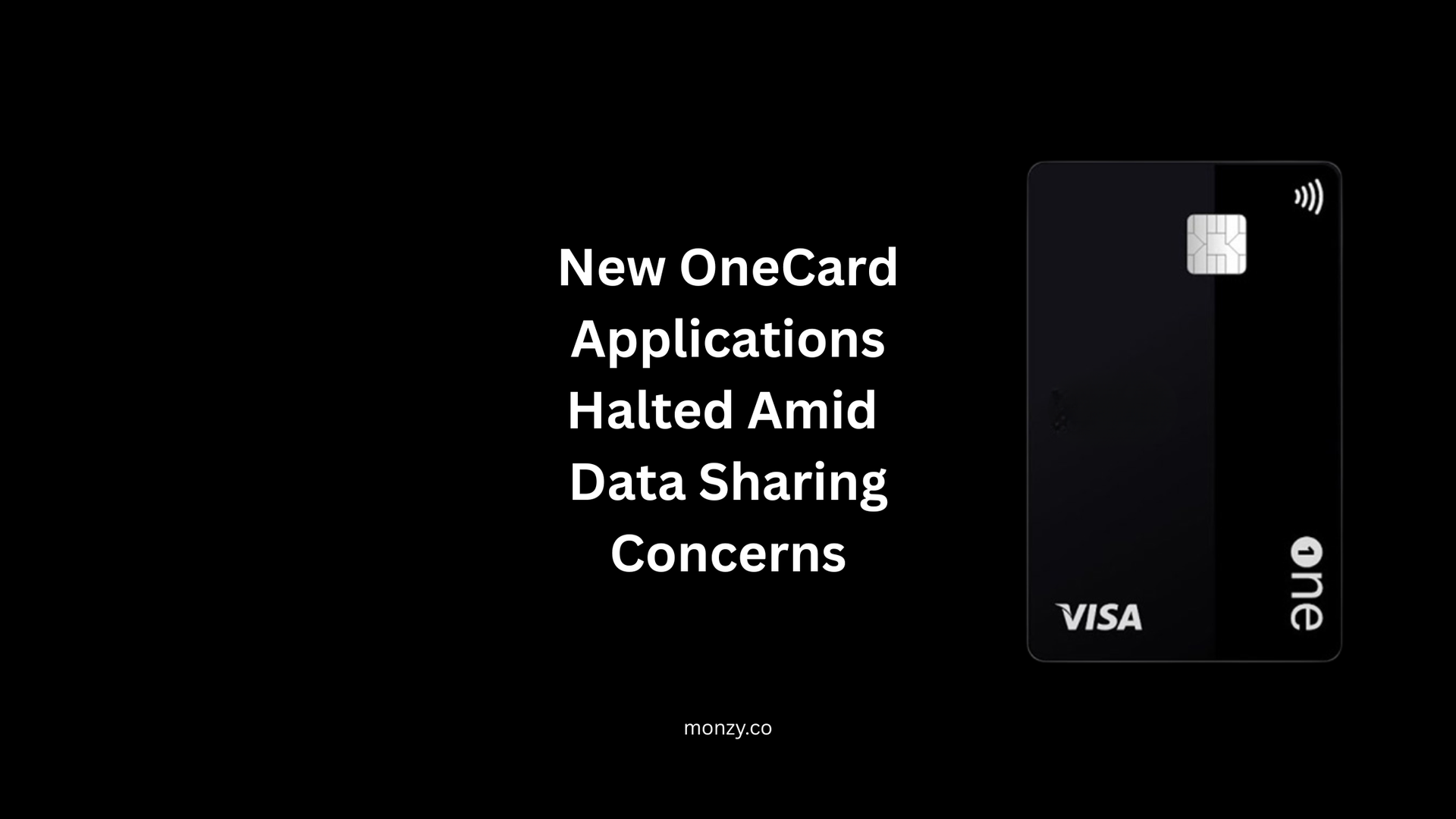
FPL Technologies’ OneCard co-branded credit card partnerships are currently halted from issuing new cards following a Reserve Bank of India (RBI) directive to partner banks to suspend new onboarding. The move is part of the RBI’s call for greater clarity on data-sharing norms in these co-branded arrangements.
OneCard Suspension: At a Glance
- Who is involved: FPL Technologies’ OneCard and partner banks, including Federal, SIB, BOB Cards, SBM, Indian Bank, and CSB.
- What: RBI directed to suspend issuance of new co-branded credit cards (One Card).
- Why: Lack of clarity on how customer and transaction data is shared, stored, and consented under existing rules.
- Effect: No new OneCard applications will be processed; existing cards continue to be serviced.
What Exactly Happened at OneCard?
According to multiple people cited by The Economic Times, RBI has issued letters to all banking partners of OneCard (operated by FPL Technologies) directing them to halt issuance of new cards until specific regulatory issues are addressed.
- The affected partner banks include BOB Cards (Bank of Baroda’s credit card arm), Federal Bank, South Indian Bank, SBM Bank, Indian Bank, and Catholic Syrian Bank.
- The RBI is seeking clarity on how data is shared between banks (card issuers) and OneCard (managed by FPL Technologies), especially in light of the rules governing the storage, ownership, and disclosure of cardholder and transaction data.
Key Regulatory Provisions Cited By RBI
Master Direction | What It States |
|---|---|
Master Direction on Credit Card and Debit Card Issuance and Conduct: amended March 7, 2024 |
|
Clause on Customer Confidentiality (RBI Circular RBI/2015-16/31 DBR.No.FSD.BC.18/24.01.009/2015-16) |
|
“The central bank has issued letters to all banking partners of FPL Technologies asking them to stop issuing cards with OneCard until certain issues raised by the regulator are addressed.” — The Economic Times
OneCard is not the only fintech card programme the RBI's co-branding rules have reshaped — Federal Bank ended its Fi partnership entirely in March 2026 after being directed to pause co-branded issuance.
Recent Precedents & Industry Moves
- Federal Bank and South Indian Bank were earlier instructed by RBI in March 2024 to stop onboarding new customers for their OneCard co-branded cards, citing similar regulatory deficiencies.
- Scapia, another fintech partner of Federal Bank, reorganised its partnership framework and received RBI approval to resume its co-branded card issuance later in 2025.
A Little Background and Strategic Implications
Co-branded credit cards: the ones where a fintech partner handles customer acquisition and branding and a bank issues the card have become more common in India.
Fintech companies like OneCard have been able to offer technology-driven app features, rewards, metal card designs, and real-time spend tracking.
However, the RBI has, over recent years, pushed stricter norms governing these partnerships.
- The March 7, 2024 amendments emphasized customer data ownership and consent.
- Mandatory requirement to clearly display the issuer bank’s name on co-branded cards and marketing materials.
These norms arise from concerns that some co-brand partners may, through technology stacks or platform control, gain de facto access to customer or transaction data. Under RBI directions, the data must stay with the card-issuing bank unless very tightly controlled.
What This Means for Existing OneCard Holders?
The suspension of OneCard’s issuance underlines how seriously the RBI is enforcing its co-branding and data privacy norms. Financial technology players that rode the wave of fintech-bank partnerships may now need to rebuild or retool operational models.
This episode may lead to a reframing of how much data fintechs can access, and expectancies around transparency and consent will likely increase. Banks may reconsider ease of partnerships in favor of tighter control over customer data and regulatory risk.
- No new OneCard applications via partner banks are being approved until compliance gaps are addressed. Those applying will likely see “application in reserve” status or “not eligible” messages.
- Existing OneCard holders will still retain their cards and receive services such as billing, transactions, and customer support. RBI’s order does not affect the servicing of issued cards.
- Resumption of new issuance is likely once partner banks provide clarity to the RBI and update their compliance frameworks, especially regarding how customer data is handled, stored, shared, and consent obtained.
In short, if you were eyeing OneCard, this regulatory pause means you'll have to wait. Anyone applying (or who has already applied) now may not get approval until compliance issues are resolved.
Existing users should monitor communications from their banks or OneCard for updates. In the larger picture, this might reset how co-branded card partnerships are structured in India: possibly limiting fintech access to cardholder data and putting banks in tighter operational control.
For those considering co-branded cards, it is wise to check the issuer bank’s name and to understand how data consents are structured in the application process.
3 Cards to consider while OneCard is paused
New OneCard applications are frozen until the RBI's compliance concerns are resolved and given Scapia took nearly a year to resume, it's worth exploring alternatives rather than waiting it out.
Here are three cards that target the same audience OneCard does: young, app-savvy users who want a clean experience and don't want to pay unnecessary fees.
IDFC FIRST WOW! Credit Card (Best if you don't have a credit history)
- Secured against an FD — easy approval even with no credit score
- Zero forex markup (rare at this price point)
- Lifetime-free variant available
- Credit limit = your FD amount, so no surprises
- Weak domestic rewards, but the approval ease and zero forex make it compelling
→ Read the full IDFC FIRST WOW! credit card review
Scapia Federal Bank Credit Card (Best for: Travel rewards, zero fee)
- Lifetime-free, earns Scapia coins redeemable on flights and hotels
- App-first, instant approval with no branch visit or paperwork
- Zero forex markup (strong for international travel)
- Already cleared RBI's co-branded card scrutiny and resumed in 2025
- Weak for domestic cashback, best value only if you travel regularly
Slice UPI Credit Card — Best for: UPI-first daily spends
- Lifetime free, no joining fee, no annual fee
- Up to 3% cashback on all spends, including small UPI transactions
- "Slice in 3" splits any purchase into 3 interest-free instalments
- Zero forex markup, works in 200+ countries
- Modest rewards ceiling — not for heavy spenders chasing premium perks
Not sure which card fits your spending? Start here
If the three above don't match your profile, we've put together a guide covering the best lifetime-free credit cards in India right now including options for daily spends, online shopping, and UPI — with real user sentiment from Reddit factored in.
About the Author

Anmol Ratan Sachdeva
Anmol has been tracking the Indian credit card market since 2019, reviewing benefits, changes across 40+ cards and documenting issuer devaluations in real time. He personally has a card portfolio across HDFC, Axis, SBI Card, ICICI, and writes from direct usage experience. His analysis focuses on real-world return calculations rather than headline reward rates. He writes content for educational purposes.