Should Scapia be a part of your wallet? Reality beyond the hype...
Last updated on
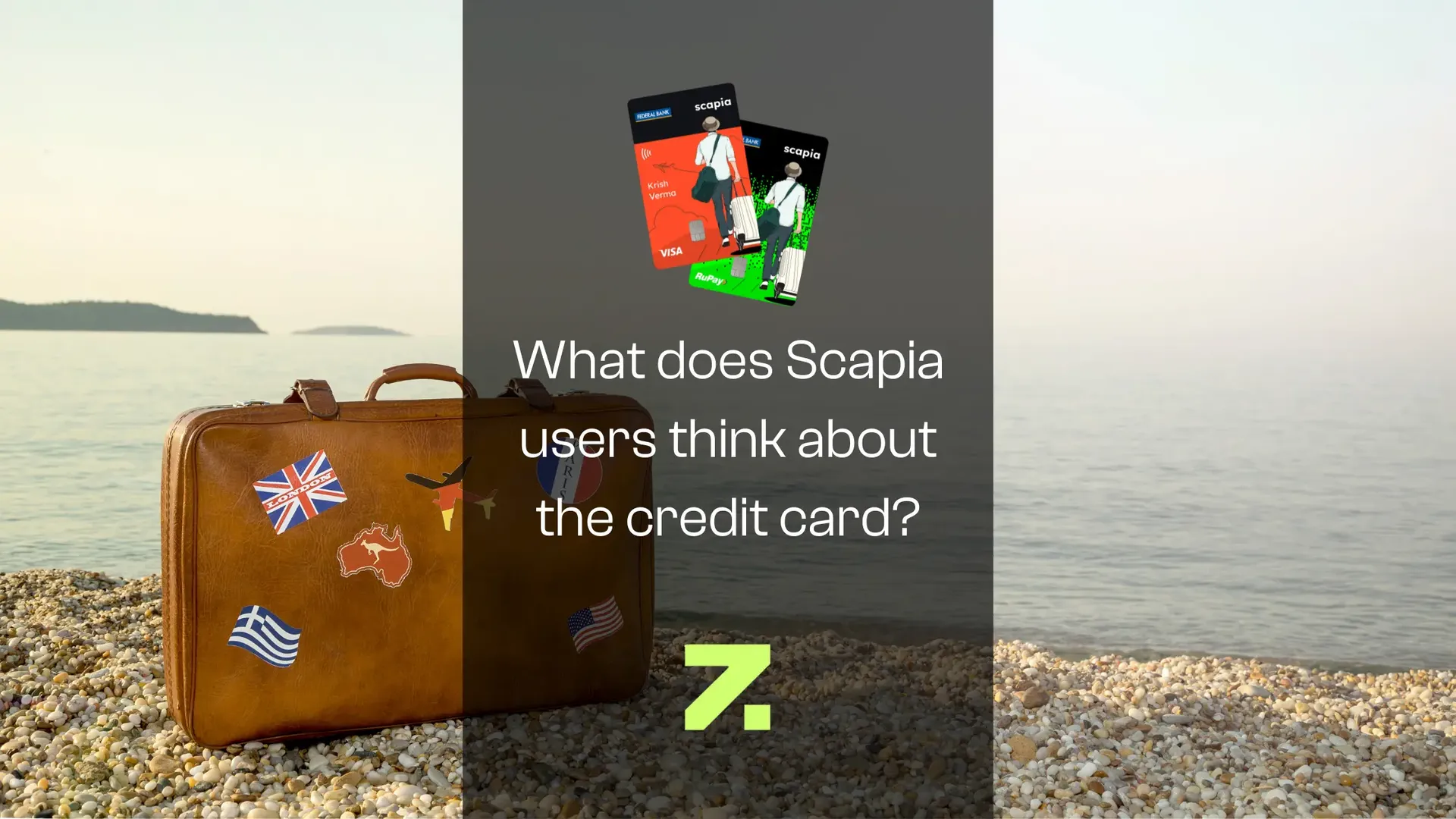
Does the Scapia credit card live up to the hype? Well, for zero forex markup, yes. But there's more to the story...
Too busy to read endless reviews & research?
Find the best cards that suit your lifestyle in 30 seconds
Try Monzy NowNo signup or email required
When I first came across the Federal Scapia Credit Card, it was the zero forex markup that caught my eye.
A lifetime free international card with travel rewards sounded too good to ignore. But I’ve been around long enough to know that every “perfect” card has a few fine prints tucked behind the glossy brochure.
So, instead of repeating the marketing description, I spent some time reading what actual users have said about this card on Reddit over the past few months.
Update (September 2026): Axis Bank became a second issuer for this card on 3 September 2026, running alongside Federal Bank. Same Scapia experience, but Axis's version comes with its own catch worth knowing before you apply – see our full breakdown of the Axis Bank Scapia card launch.
What the Internet Is Saying about Scapia Credit Card?
Across multiple discussions on r/CreditCardsIndia, the Scapia card evokes a mix of enthusiasm and frustration.
A lot of folks love the travel perks and the fact that it’s lifetime free, but others have hit walls with vague rejections, slow onboarding, and low credit limits.
IDFC FIRST WOW! can be a good alternative to this card. AU Xcite ACE Credit Card is also an entry-level card alternative you can explore.
Let’s Start with the Good Stuff…
The biggest brownie point, and one that keeps coming up repeatedly, is zero forex markup.
Users confirm that international spends are billed at Visa’s real-time rates, with no hidden charges (source). For anyone with digital subscriptions or frequent overseas trips, that’s genuinely rare and valuable.
Then there’s the lounge access for domestic airports. You typically need to hit a spending threshold (around ₹20,000 in a month) to qualify: modest and achievable if you’re using it for daily spends (source).
Scapia’s reward coins also get some appreciation. You earn around 2% on general spends and more on flight or hotel bookings through the Scapia app. Some travelers found it easy to redeem points for travel without waiting to hit huge thresholds (source).
Scapia is great for travel, but is it your best card? see which card actually fits your spending →
Now, The Other Side of the Coin
Here’s where the equation gets tricky. A surprising number of users applied with good credit scores and income, yet got rejected without explanation.
Many received a polite “as per internal policy” note with no clear guidance on how to fix it (source). In fact, even I’ve not been able to get into the Scapia landscape despite having a good credit history.
If you've been rejected twice with a clean score, it's probably not your score. Here's why Scapia rejects applicants on PIN code alone.
Even those who got approved weren’t always thrilled. Some pointed out low credit limits, even for those with spotless credit histories.
A few mentioned that their assigned limits were far below other cards they held (source).
The onboarding process also came under fire among many other posts.
People have complained about video KYC glitches, slow agent responses, and unclear app updates (source).
In a world where fintechs promise “card approval in minutes,” that feels like a missed opportunity.
“I had to do my V-KYC twice. The app kept disconnecting. Took over a week for the card to even dispatch.” (user feedback)
One more subtle gripe I noticed: while the rewards sound great on paper, booking travel exclusively through the Scapia app doesn’t always yield the best prices. Some users compared costs and found cheaper fares on other booking platforms (source).
One more group holds this card without ever applying for it: Fi Federal cardholders who were migrated to Scapia after the Fi programme shut down.
Does the Scapia Card Fit in My Wallet?
Personally, I see the Scapia Credit Card as a niche travel tool rather than a main workhorse. I wouldn’t use it for groceries or utilities: that’s what my cashback cards are for. But for international payments, flight tickets, and lounge access on occasional trips, it makes sense, especially because it’s LTF (lifetime free).
Zero forex cards are rare in India, and that perk alone can save you a few thousand rupees a year if you spend globally.
That said, if you’re applying, walk in with realistic expectations. The approval process isn’t transparent, and credit limits may vary wildly. So keep your main spending card separate and treat Scapia as your add-on for travel use.
One more thing worth knowing before you apply. Federal Bank is taking over Standard Chartered's Indian card portfolio after 31 July 2026, bringing as many as 4.5 lakh new accounts onto its books. A bank absorbing that much volume in one go tends to revisit its reward economics — and Federal already trimmed Scapia's benefits once in February 2026. Nothing to panic about, but it is a reason to treat the current earn rate as the best case rather than the permanent case.
Lessons I Took Away After Reading about Scapia
- Good credit history isn’t a guarantee for approval: banks still go by internal filters.
- Check if the app-based travel bookings are truly cheaper before using reward coins.
- Use the first few months to test the card abroad; verify forex rates on small transactions.
- Keep patience during onboarding: KYC delays seem common across user experiences.
If you love travel and hate fees, Scapia has real value, especially since you aren’t paying to keep it.
But if you’re chasing a smooth, predictable experience, you might want to wait until the bank irons out its approval and KYC issues. I’d call this one a “smart secondary card for travel-savvy users”, not your daily driver.
At the end of the day, I like that Indian cards like Scapia are warming up to global-friendly use.
The zero-forex movement is a big win for all of us who grew up seeing “foreign transaction fee: 3.5%” on every small purchase. That’s a quiet revolution: one worth watching.
About the Author

Anmol Ratan Sachdeva
Anmol has been tracking the Indian credit card market since 2019, reviewing benefits, changes across 40)+ cards and documenting issuer devaluations in real time. He personally has a card portfolio across HDFC, Axis, SBI Card, ICICI, and writes from direct usage experience. His analysis focuses on real-world return calculations rather than headline reward rates. He writes content for educational purposes.